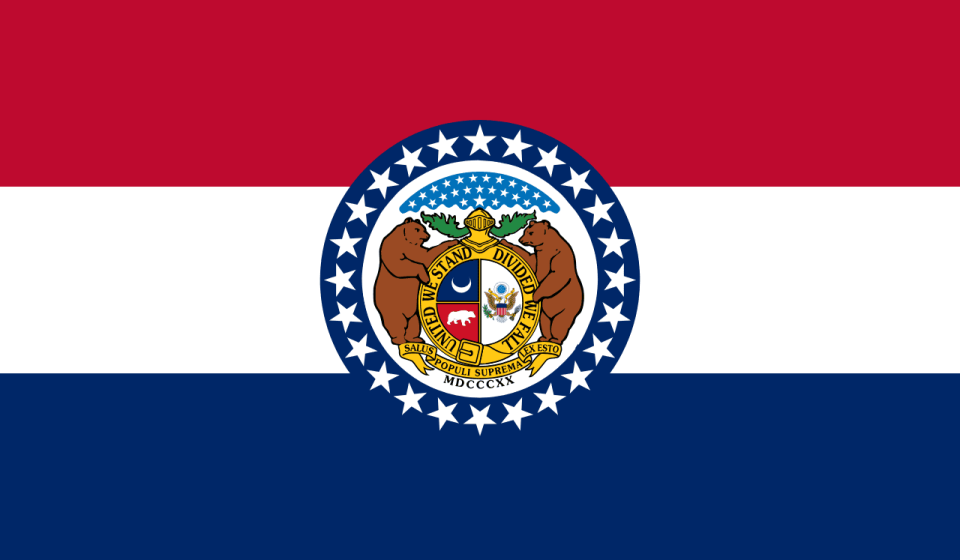
Meant for owners and clinical leads about to start, buy, relocate or renew a Missouri program for substance use or mental illness, including the ones still unsure whether the state needs to hear from them at all.
Additional Missouri Licensing Guides
- Missouri Drug and Alcohol Inpatient Treatment Licensing
- Missouri Drug and Alcohol Outpatient Treatment Licensing
- Missouri Mental Health Inpatient Licensing
- Missouri Mental Health Outpatient Licensing
- Missouri License Reinstatement
Missouri Certifies on Request but Licenses by Statute
The agency roles, rule numbers and dates in this section come from DMH and DHSS web pages, the Revised Statutes of Missouri and the Code of State Regulations. Anything we conclude from them is flagged as our reading.
Missouri opens with a different question than most states. Instead of asking which license you need, the Department of Mental Health (DMH) Division of Behavioral Health asks whether you contract with it. DBH’s certification page exempts agencies with no division contract from certification, unless they provide eligible services and are paid for them out of county mental health money (9 CSR 30-2.010), while any organization contracting with DBH must obtain and maintain it. The rule is written the same way. 9 CSR 30-3.032(1) begins “Certification from the department is available for the following types of programs and services” and then lists eleven types, residential treatment, outpatient treatment and withdrawal management among them.
So a private addiction program with no DBH contract can, by our reading, open its doors without state certification. Plenty choose to get it anyway, because certification is the state’s own statement that a program meets 9 CSR 10-7 and 9 CSR 30-3, and DBH publishes an alphabetical list of the programs it has certified. One caution belongs here. RSMo 630.735 speaks of facilities for persons with a “mental disorder,” and nothing we read says whether DMH treats a residential addiction program as one. 9 CSR 40-1 describes its license in terms of mental illness, intellectual disabilities and developmental disabilities, so we read OLC licensing as not reaching residential SUD care, but that is worth confirming with OLC in writing before you sign a lease.
Mental health residential care is a different matter, because there the statute uses the word license. RSMo 630.735 bars anyone from operating a residential facility or day program for persons with a mental disorder or mental illness “unless the facilities or programs are licensed by the department.” DMH’s Office of Licensure and Certification (OLC) issues those licenses under 9 CSR 40, and 9 CSR 40-4 sets up two adult settings: Psychiatric Individualized Supported Living (PISL), where one to four adults live in a private home, and the Intensive Residential Treatment Setting (IRTS), sized for five to sixteen. Psychiatric hospitals sit with a third office, the Department of Health and Senior Services (DHSS) Bureau of Hospital Standards.
Accreditation counts twice here. Under 9 CSR 10-7.130(9)(A), a program accredited by CARF International, The Joint Commission or the Council on Accreditation is deemed certified, and its certification runs “equivalent to the period of time granted by the accrediting body.” On the licensure side, 9 CSR 40-1.055 deems accredited residential and day programs licensed, and RSMo 630.705.3(6) goes further, listing accredited facilities among those that “shall not be licensed by the department.” The statute still uses the old accreditor names, so read it with the current rule beside it.
Primary Regulatory Agencies
Each office is described the way its own page or its enabling statute describes it.
- DMH Division of Behavioral Health, DBH Certification Unit, which certifies substance use disorder and mental health programs under 9 CSR 10-7, 9 CSR 30-3 and 9 CSR 30-4 and takes applications at dbhcertification@dmh.mo.gov
- DMH Office of Licensure and Certification, which licenses residential settings and day programs, PISL and IRTS settings included, under RSMo 630.705 to 630.755 and 9 CSR 40 (573-751-4024, DMH-OLC@dmh.mo.gov)
- DHSS Bureau of Hospital Standards, which licenses hospitals, psychiatric hospitals included, under RSMo 197.010 to 197.477 and 19 CSR 30-20 (573-751-6303)
- DHSS Certificate of Need Program, which administers the Missouri Certificate of Need Law, RSMo 197.300 to 197.366 (573-751-6403)
- DHSS Bureau of Narcotics and Dangerous Drugs (BNDD), which issues the state controlled substance registration under RSMo chapters 195 and 579
- Missouri Credentialing Board (MCB), the body DMH rules name for certifying or registering substance abuse professionals, which issues the CADC, CRADC and CRAADC among other credentials
Missouri Behavioral Health Licensing Snapshot
Every row points back to a rule, statute or agency page listed under Sources. Where a row carries our own reading, it says so.
| Primary SUD Regulator | DMH Division of Behavioral Health, through certification under 9 CSR 10-7 and 9 CSR 30-3. Required for DBH contracts, otherwise available on request |
| Mental Health Facility Licensing | DMH OLC licenses adult mental health residential settings (PISL and IRTS) and day programs under 9 CSR 40. DHSS licenses psychiatric hospitals. DBH certifies outpatient mental health treatment programs under 9 CSR 30-4.190 on the same voluntary basis as SUD programs |
| Residential Treatment | Certifiable as residential treatment (9 CSR 30-3.140), with at least two staff on duty and at least 50 hours of structured therapeutic activity a week. CSTAR programs certify by ASAM level, including 3.1, 3.3, 3.5 and 3.7 (9 CSR 30-3.152) |
| Outpatient Treatment | Three certified levels in 9 CSR 30-3.130: community-based primary treatment, intensive outpatient rehabilitation and supported recovery. Certified outpatient programs without a DMH contract also follow 9 CSR 30-3.195 |
| Withdrawal Management | Social setting, modified medical (non-hospital) and medical (licensed hospital) detoxification under 9 CSR 30-3.120. The CSTAR rule adds ASAM 3.2-WM and 3.7-WM |
| Facility License Required | Yes for mental health residential facilities and day programs (RSMo 630.735) unless exempt under 630.705.3, and for hospitals. For a private SUD or outpatient mental health program with no DBH contract, our reading is that no state license or certification is required |
| Certificate of Need | Limited. A new hospital, psychiatric hospitals included, and long-term care beds need CON from DHSS. SUD and mental health residential or outpatient programs are not on the RSMo 197.366 list, by our reading |
| National Accreditation | CARF, The Joint Commission or COA accreditation gives deemed DBH certification for the accreditation period (9 CSR 10-7.130). Residential and day programs accredited by CARF, CQL or The Joint Commission are deemed licensed (9 CSR 40-1.055) |
| Inspection | DBH surveys non-accredited applicants on site and puts its findings in writing within a month (30 calendar days) of the exit meeting. OLC inspects on site, with a State Fire Marshal inspection for most residential programs. Hospital licensure surveys follow Medicare standards |
| License Renewal | DBH certification lasts 1 to 3 years, renewal filed at least 60 calendar days ahead. OLC licenses last one year, renewal filed at least 90 business days ahead. Hospital licenses last up to a year, renewal filed 90 to 30 days ahead |
| Key Regulations | RSMo 630.705 to 630.755, 9 CSR 10-5, 9 CSR 10-7, 9 CSR 30-3, 9 CSR 30-4, 9 CSR 40-1 and 9 CSR 40-4 (DMH), RSMo 197.010 to 197.477 and 19 CSR 30-20 (hospitals), RSMo 197.300 to 197.366 (CON) |
Which Missouri Office Handles Which Program
DMH doesn’t publish a chart like this. We assembled it from the rules and agency pages cited, so treat the arrangement as our reading.
| Program | State office and word used | Governing text | Effect of accreditation |
|---|---|---|---|
| Residential SUD treatment | DBH, certification (optional without a DBH contract) | 9 CSR 30-3.140, 9 CSR 10-7 | Deemed certified (CARF, TJC, COA) |
| Social setting or modified medical detox | DBH, certification | 9 CSR 30-3.120 | Deemed certified |
| Outpatient SUD, Levels I to III | DBH, certification | 9 CSR 30-3.130, 9 CSR 30-3.195 | Deemed certified |
| Outpatient mental health treatment program | DBH, certification | 9 CSR 30-4.190 | Deemed certified |
| Adult mental health residential, PISL (1 to 4) or IRTS (5 to 16) | OLC, licensure | RSMo 630.735, 9 CSR 40-1, 9 CSR 40-4 | Deemed licensed (CARF, CQL, TJC) |
| Facility caring for fewer than four people whose care DMH does not fund | Exempt from DMH licensure | RSMo 630.705.3(7) | Not needed for licensure |
| Psychiatric hospital | DHSS, licensure, plus CON for a new hospital | RSMo 197, 19 CSR 30-20 | Nothing in the hospital rule we read substitutes accreditation for the state survey |
The CSTAR rule, 9 CSR 30-3.152, is where Missouri attaches ASAM numbers to residential care, certifying 3.1, 3.3, 3.5 and 3.7 among its levels. The general residential treatment category in 9 CSR 30-3.140 carries no level number. An operator who wants an outside, checkable claim to a residential level can pursue CARF’s ASAM Level of Care Certification. CARF grants it for adult residential Levels 3.1, 3.5 and 3.7 only, and ASAM describes the program as delivered in partnership with CARF. Nothing in the DBH rules or forms we read refers to it, so we would not expect to see it on a DBH certificate. It does show up in CARF’s provider search under the Certification filter, where “ASAM Level of Care 3.7” sits beside the 3.1 and 3.5 options. Neither organization’s page lists a withdrawal management level, so the certification says nothing about 3.2-WM or 3.7-WM.
Programs Covered
- Residential substance use disorder treatment, including CSTAR programs certified at ASAM residential levels
- Social setting and modified medical withdrawal management
- Outpatient SUD treatment at all three Missouri levels, intensive outpatient included
- Outpatient mental health treatment programs
- Adult mental health residential settings licensed as PISL or IRTS
- Psychiatric hospitals
Key Licensing Requirements
Pulled from the current DBH and OLC application forms and the rule sections named in each line.
- For DBH certification, the Non Accredited Agencies Certification Application (updated October 21, 2024) or the Accredited Agencies Certification Application (revision date July 17, 2026), mailed without staples or emailed as one scanned PDF to dbhcertification@dmh.mo.gov
- For a non-accredited treatment applicant, a Medication Assisted Treatment policy and procedure, a MAT screening tool, an MOU with a MAT provider if the agency does not offer it, a crisis MOU and a qualified licensed diagnostician
- For an accredited applicant, the most recent survey report from each non-DMH licensing, certifying or accrediting body
- For an OLC license, Application for Licensure MO 650-9087 (9-2022), filed at least 30 days before opening with policies, a labelled floor plan and a staffing pattern
- For a psychiatric hospital, a CON review where the project is a new hospital, then hospital licensure through DHSS on form MO 580-0007 (4-2021)
- A counseling staff in which a majority of those providing individual and group counseling are Qualified Addiction Professionals (9 CSR 30-3.110) for certified SUD programs
Frequently Asked Questions
What does Missouri charge to certify or license a behavioral health program?
Very little in state fees. The only certification fee in 9 CSR 10-7.130 is for SATOP programs, at $125, $250 or $500 depending on how many people were served, so our reading is that DBH charges nothing to certify a treatment program. An OLC license costs $10 for a program accepting more than three but fewer than ten people and $50 for ten or more, with no fee at three or fewer (RSMo 630.715), and the fee is non-refundable. A hospital license runs $250 annually, with $3 added for each of the first 400 beds (RSMo 197.050). If a project is a new hospital, the CON application fee is at least $1,000 or one-tenth of one percent of project cost, whichever is greater. Set beside rent, a policy manual and months of pre-opening salaries, those fees barely register.
How long does Missouri behavioral health licensing take?
DBH publishes no decision deadline for initial certification. What the rule does fix is the survey cycle: survey findings in writing within 30 calendar days of the exit conference, a correction plan due 30 calendar days after a noncompliance notice arrives, and a department answer on that plan within 15 calendar days. OLC wants the licensure application at least 30 days before opening and schedules the fire safety and license inspections only after it approves the application. We plan around 3 to 6 months, our own estimate rather than anything DBH publishes, for outpatient certification and 6 to 9 months for a residential program. Accredited applicants can move faster, by our reading, since the accredited application asks for site inspections only at sites missing from the accreditation report. A new psychiatric hospital adds CON review, which DHSS says takes at least 71 days on the full track.
Where do Missouri applicants usually get stuck?
Three places come up again and again. Owners wait months for a license Missouri never required of their private outpatient program, or they treat certification as optional and then sign a DBH contract that requires it. Others send DBH a partial packet, and if the resubmitted version is still incomplete, 9 CSR 10-7.130 lets the department bar the applicant from reapplying for up to a year. The third is paperwork age. The non-accredited application was updated October 21, 2024, and the accredited one carries a July 17, 2026 revision date, so a form saved years ago is the wrong form.
Can you guarantee a Missouri certification or license?
No. DBH, OLC and DHSS each make their own call, and nobody outside those offices controls it. Our part is a packet that matches the current form and the rule sections it is graded against, with the policy manual written to 9 CSR 10-7 and the program rule that applies.
How much staff will a new Missouri program need?
For a certified SUD program, a majority of the people delivering individual and group counseling must be Qualified Addiction Professionals (9 CSR 30-3.110), residential treatment needs at least two staff awake and dressed on duty at all times (9 CSR 30-3.140), and modified medical detox needs a registered or licensed nurse on duty around the clock (9 CSR 30-3.120). BLS reports a $56,910 median for Missouri substance abuse, behavioral disorder and mental health counselors, with the 25th percentile at $44,140 and the 75th at $72,280 (BLS OEWS, May 2025), which is $2,440 under the $59,350 national median. Four counselors at the Missouri median come to about $227,640 in base pay before benefits. Missouri’s associate counselor route keeps that number well below what an all-credentialed team would cost. Under 9 CSR 30-3.110 an associate counselor works on a training plan with a supervisor who reviews and countersigns their documentation, so one qualified clinical lead can carry several associate counselors, who must meet Missouri Credentialing Board requirements for that role, while they work toward a full credential, which commonly trims 40 to 60 percent off the counseling budget that a fully credentialed staff would run. Detox nursing follows the same logic, since the rule accepts a registered or a licensed nurse on duty, so a single RN can direct LPNs across the remaining shifts. The final roster depends on the levels you certify and the census you expect.
Licensing
Is DBH certification the same thing as a license?
No, and Missouri keeps the words apart. DBH certifies programs under 9 CSR 10-7 and the program rules in 9 CSR 30. OLC issues a license under RSMo 630.735 and 9 CSR 40 for residential facilities and day programs serving people with mental illness or developmental disabilities. DHSS issues hospital licenses. A program can hold more than one of these, and each comes from a different office with its own form.
What exactly does accreditation buy a Missouri program?
Quite a lot. For DBH certification, 9 CSR 10-7.130(9)(A) recognizes “CARF International, The Joint Commission, Council on Accreditation, or other entity recognized by the department,” the certification lasts as long as the accreditation does, and an accredited applicant files the accredited application with its survey reports instead of waiting on a full state survey. Accreditation changes must be reported to DBH within seven calendar days, and DBH may rescind certification if accreditation is lost. For OLC licensure, 9 CSR 40-1.055 deems licensed a program accredited by CARF International, The Council on Quality and Leadership or The Joint Commission, which must send its survey report to OLC within 30 days of receiving it and remains subject to department monitoring.
Is Missouri changing its outpatient SUD rule?
DMH has posted a draft amendment to 9 CSR 30-3.130, marked for comment on October 8, 2026, with a public hearing by Webex on November 16, 2026. Among the visible changes, detoxification becomes withdrawal management and primary treatment moves to being “offered at least twenty-five (25) hours of service per week.” Through the October 15, 2026 issue the draft had not appeared in the Missouri Register, so it is a proposal and nothing more. The rule in force is the one last amended in 2003.
Facility
Does a Missouri program need a Certificate of Need?
Only in a narrow set of cases. RSMo 197.366 lists the facilities CON covers, including chapter 198 facilities, long-term care beds and the “Construction of a new hospital as defined in chapter 197.” A new private psychiatric hospital falls in that last group by our reading, and DHSS’s CON FAQ says space licensed as a hospital needs CON. Residential and outpatient SUD or mental health programs are not on the list. The CON program takes questions at CONP@health.mo.gov and 573-751-6403.
Is a very small residential home exempt from DMH licensure?
Possibly. RSMo 630.705.3(7) exempts “Any facility or program caring for less than four persons whose care is not funded by the department,” and OLC charges no license fee at a capacity of three or fewer. Both conditions have to hold. Get OLC’s agreement in writing before you rely on the exemption for a specific home.
When does the fire inspection happen?
After OLC approves the application. 9 CSR 40-1.055(6) says the application has to be approved before a Division of Fire Safety or license inspection is scheduled, and the licensure application calls for a State Fire Marshal inspection for residential programs other than DHSS dual-licensed homes, PISL settings and family living arrangements.
Staffing
Who counts as a Qualified Addiction Professional?
The rules don’t say. 9 CSR 30-3.110 and 9 CSR 30-3.195 use the term, but neither they nor the definitions section, 9 CSR 10-7.140, define it. What 10-7.140 does define is a “qualified substance abuse professional”: a physician or qualified mental health professional licensed or provisionally licensed in Missouri, or “A person who is certified or registered as a substance abuse professional by the Missouri Credentialing Board.” Ask DBH which credentials it will count as QAP before you build the roster around a particular mix.
What do Missouri Credentialing Board credentials require?
The CADC application, revised December 2025, asks for work experience within the last ten years that scales with education: 1,000 hours with an applicable master’s degree, 2,000 with a bachelor’s, 3,000 with an associate’s degree or one-year addiction certificate, and 4,000 with a high school diploma or HSE. Every applicant also needs a 300-hour supervised practicum, 180 contact hours of education including 6 in ethics, and a passing score on the IC&RC ADC exam. The CRADC raises the hours to between 2,000 and 6,000 and the education to 300 contact hours. The CADC application also requires applicants to live or work in Missouri at least 51 percent of the time.
Operations
Can a certified program turn away someone on MOUD?
No. The medication rule that applies to every certified and deemed certified program, 9 CSR 10-7.070(1)(D), says “Individuals cannot be denied service due to taking prescribed medication as directed.” Prescribers in Missouri also need a BNDD registration on top of their DEA registration, and BNDD takes those applications online only. Methadone and other opioid treatment programs are certified separately under 9 CSR 30-3.132, so a residential program that lacks one coordinates with one.
What has to be reported after a serious event?
9 CSR 10-5.206 reaches agencies that DMH licenses, certifies or deems, along with those it funds or contracts with, outpatient programs included. Reports go on the EMT Community Event Report form MO 650-9475 by encrypted email to DBH’s Regional Community Operations staff for the region. For people receiving DBH-funded services, DBH’s current instructions call for the written report within one business day and immediate reporting of suspected abuse, neglect or misuse of funds, and 9 CSR 10-5.200 requires an immediate written complaint to the head of the agency and the department’s regional office in those cases.
Enforcement
What can DBH do to a certified program?
Section (14) of 9 CSR 10-7.130 lists six grounds for denying or revoking certification: deficiencies that put the people served in actual or likely jeopardy, serious or repeated abuse, neglect, misuse of funds or property or rights violations, fraudulent fiscal practices or significant repeated billing errors, falsified or fabricated compliance information, deficiencies that amount to a failure to conform to the basic requirements of the service, and a program still out of compliance when provisional or conditional certification runs out. Short of that, its sanctions include suspending certification or suspending new admissions. A program has 30 calendar days from a denial or revocation notice to appeal to the DMH director, and the director’s decision is final. After a denial or revocation, DBH may refuse a new application for up to 24 months.
And for an OLC-licensed residential program?
9 CSR 40-1.055 lets OLC deny a renewal or revoke a license when a program hasn’t carried out an approved plan of correction, or offer a probationary license by consent agreement. The licensee can ask the department’s hearing administrator for review within 10 business days and can take the matter to the Administrative Hearing Commission. RSMo 630.755 adds a civil penalty that can reach $10,000 a day while noncompliance continues after notice. Missouri License Reinstatement covers getting back in good standing.
Where We Come In
The work we take on
Deciding whether a Missouri program should seek DBH certification at all, preparing the accredited or non-accredited packet, writing policies against 9 CSR 10-7 and the matching 9 CSR 30 rule, getting an adult mental health residence through OLC, and preparing for CARF or Joint Commission surveys that feed deemed status.
The work we leave to others
Medicaid, payer enrollment, DBH contracting, billing and marketing. Ask and we will name specialists who handle them.
Weighing whether certification is worth pursuing for your Missouri program? Talk it over with us.
Author: A. Ant, CADC-II, Licensing & Accreditation Expert
Disclaimer: This content is provided for general informational purposes only and should not be construed as legal, regulatory, or licensing advice. Requirements change frequently. Consult qualified professionals for guidance specific to your situation.
Sources
- DMH Division of Behavioral Health, certification (scope, contracts, forms, contacts): Certification (checked October 16, 2026)
- DMH, Non Accredited Agencies Certification Application (updated October 21, 2024): Application (PDF) (checked October 16, 2026)
- DMH, Accredited Agencies Certification Application (revision date July 17, 2026): Application (PDF) (checked October 16, 2026)
- DMH Office of Licensure and Certification: Licensure and Certification and Application for Licensure MO 650-9087 (PDF) (checked October 16, 2026)
- RSMo 630.705, 630.715, 630.735 and 630.755: 630.705 and 630.715 and 630.735 and 630.755 (checked October 16, 2026)
- 9 CSR 10-7, Core Rules (7.070, 7.130, 7.140): 9 CSR 10-7 (PDF) (checked October 16, 2026)
- 9 CSR 10-5, General Program Procedures (5.200, 5.206): 9 CSR 10-5 (PDF) (checked October 16, 2026)
- 9 CSR 30-3, SUD programs (3.032, 3.110, 3.120, 3.130, 3.132, 3.140, 3.152, 3.195): 9 CSR 30-3 (PDF) (checked October 16, 2026)
- 9 CSR 30-4, Mental Health Programs (4.190): 9 CSR 30-4 (PDF) (checked October 16, 2026)
- 9 CSR 40-1 and 9 CSR 40-4, DMH licensing and behavioral health community residential: 9 CSR 40-1 (PDF) and 9 CSR 40-4 (PDF) (checked October 16, 2026)
- DMH, draft 9 CSR 30-3.130 amendment and hearing notice: Draft (PDF) and Hearing notice (PDF) (checked October 16, 2026)
- Missouri Secretary of State, Missouri Register 2026 issues: Missouri Register (checked October 16, 2026)
- DMH, CIMOR EMT Event Report Form Instructions (review date 6.4.26) and event reporting page: Instructions (PDF) and Event Reporting (checked October 16, 2026)
- DHSS Bureau of Hospital Standards and 19 CSR 30-20: Hospital Standards and 19 CSR 30-20 (PDF) (checked October 16, 2026)
- RSMo 197.050, hospital license fee: 197.050 (checked October 16, 2026)
- DHSS Certificate of Need Law and FAQs: CON Law and CON FAQs (checked October 16, 2026)
- DHSS Bureau of Narcotics and Dangerous Drugs: BNDD (checked October 16, 2026)
- Missouri Credentialing Board, credentials and CADC and CRADC applications: Credentials and CADC application (PDF) and CRADC application (PDF) (checked October 16, 2026)
- CARF and ASAM, Level of Care Certification, and CARF provider search: CARF Level of Care Certification and ASAM Level of Care Certification and CARF Find a Provider (checked October 16, 2026)
- U.S. Bureau of Labor Statistics, OEWS May 2025, SOC 21-1018: Missouri and National (checked October 16, 2026)