Author: A ANT

  • How to Get Joint Commission Accreditation

    How to Get Joint Commission Accreditation

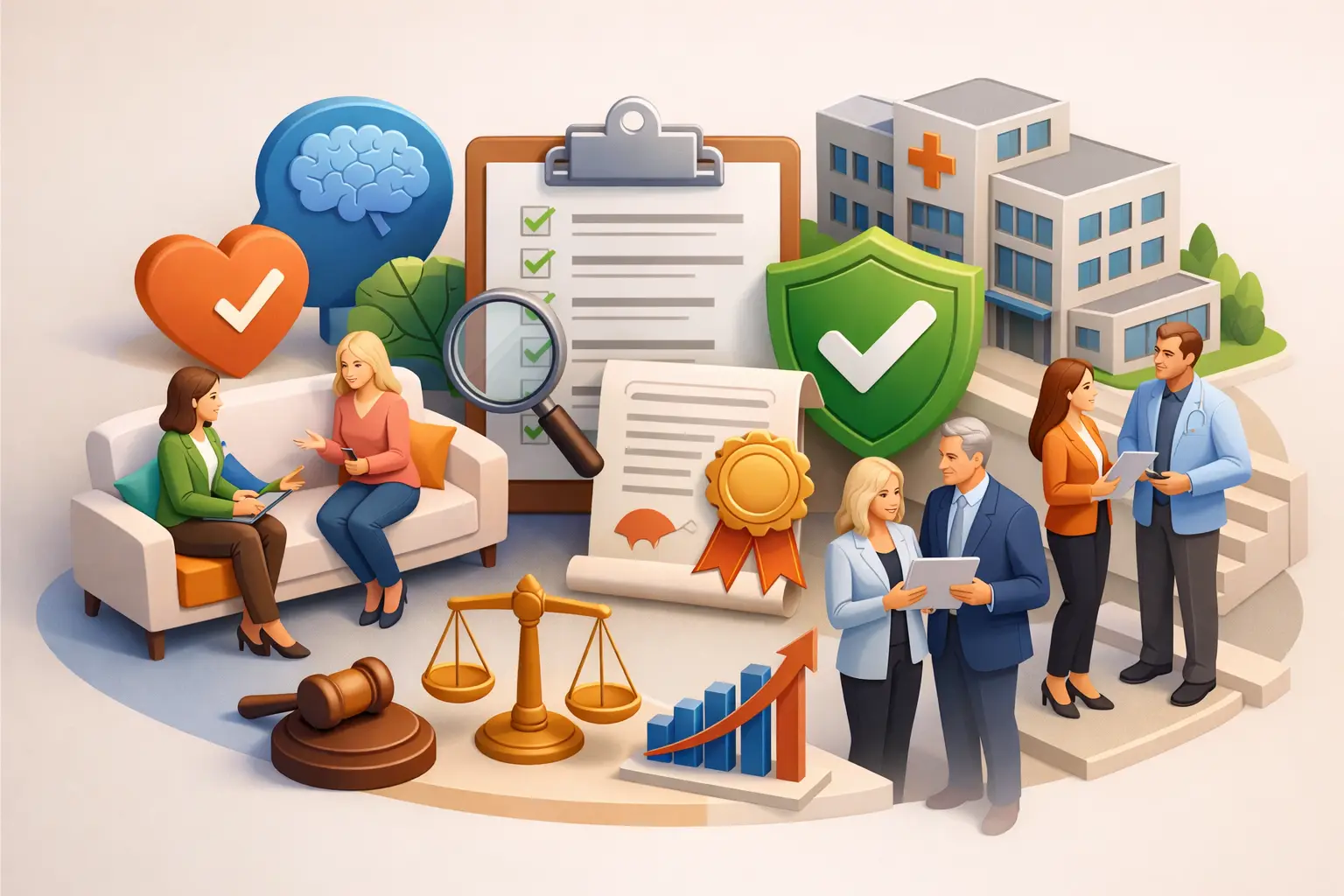
    If you are asking how to get Joint Commission accreditation, you are probably already feeling the pressure from two directions at once: operational readiness and regulatory risk. For behavioral health and mental health providers, accreditation is not just a badge. It affects payer confidence, referral relationships, clinical consistency, and your ability to prove that your organization can deliver safe, compliant care under scrutiny.

    The good news is that accreditation is a process you can control. The bad news is that many organizations wait too long to build the infrastructure behind it. They focus on the survey date, when the real work starts much earlier – in governance, policy alignment, staff accountability, documentation practices, and performance improvement.

    How to get Joint Commission accreditation starts with readiness

    The first mistake many providers make is treating Joint Commission accreditation like a paperwork project. It is not. The survey team will review documents, but they are also evaluating whether your organization consistently operates the way your policies say it does.

    That gap between written policy and actual practice is where many organizations struggle. A behavioral health provider may have a strong clinical model and committed staff, yet still fail to meet the standard because treatment plans are inconsistent, training is undocumented, infection control is loosely managed, or performance improvement data is incomplete. Accreditation depends on evidence, not intent.

    Before you apply, you need an honest readiness assessment. That means reviewing your current licensure status, scope of services, leadership structure, credentialing process, clinical documentation, environment of care, quality program, and staff training records. If you are opening a new facility or expanding services, timing matters. In some cases, state licensure and operational milestones need to be in place before accreditation can move forward in a practical way.

    Understand what Joint Commission will evaluate

    Joint Commission standards are broad because they examine how the organization functions as a whole. For behavioral health providers, that usually includes patient rights, assessment and care planning, medication management if applicable, environment of care, infection prevention, staff competency, leadership oversight, and quality improvement.

    This is where a lot of executive teams underestimate the work. Standards do not live in one department. Accreditation touches admissions, clinical services, HR, operations, facilities, and executive leadership. If one part of the organization is weak, it can affect the overall result.

    It also depends on your service lines. An outpatient mental health clinic, a residential substance use disorder program, and a multi-site behavioral health organization will not prepare in exactly the same way. The core framework may be similar, but the policies, records, and survey focus areas can differ significantly.

    Documentation is where readiness becomes visible

    You can have experienced staff and strong leadership, but if your documentation does not support your processes, the survey will expose it quickly. Clinical records should show timely assessments, individualized treatment planning, documented progress, discharge planning, and appropriate signatures. Personnel files should support credentials, orientation, background checks where required, competency validation, and ongoing education.

    Organizations often discover too late that their forms do not match their policies, or that their policies do not match their actual workflow. That is a fixable problem, but it takes deliberate work. Clean, aligned documentation is one of the fastest ways to reduce survey risk.

    The practical process for how to get Joint Commission accreditation

    For most providers, the process works best in five stages: assess, build, apply, rehearse, and sustain. Skipping any of those stages usually creates unnecessary exposure.

    Start with a gap analysis. This should compare your current operations against the standards that apply to your program type. Be direct about weaknesses. If incident reporting is informal, say so. If staff training records are incomplete, identify it. If your quality committee exists on paper but not in practice, that needs to be corrected before surveyors arrive.

    Next, build the compliance infrastructure. This includes revising policies and procedures, organizing files, correcting documentation workflows, formalizing performance improvement activities, and assigning clear accountability. Accreditation fails when responsibility is vague. Someone must own policy management, someone must own training records, someone must own credentialing, and leadership must own oversight.

    Then comes the application phase. At this point, your organization should not be hoping it is ready. It should have a reasonable basis to prove readiness. Application timing matters because once the process advances, the survey window becomes real. Applying too early can force your team into rushed remediation and increase the chance of avoidable findings.

    After application, rehearse for survey conditions. Conduct mock surveys, tracer activities, file reviews, and leadership interviews. Walk through the patient experience from intake to discharge. Review how staff answer basic questions about safety, reporting, patient rights, and their role-specific responsibilities. The goal is not to script people. The goal is to confirm that daily operations are organized, understood, and defensible.

    Finally, sustain the system. Accreditation is not won by preparing for one week of scrutiny. It is maintained by building systems that work every month. Organizations that treat compliance as an ongoing operating discipline are far more stable during surveys and far less likely to scramble when issues arise.

    Common barriers that delay accreditation

    The most common barrier is incomplete operational maturity. Some organizations want accreditation before they have stable workflows, fully implemented policies, or reliable supervision structures. That creates stress because the survey is testing a living system, not a business plan.

    Another barrier is fragmented ownership. Compliance work gets spread across clinical leaders, office managers, HR staff, and executives, but no one has full visibility. The result is predictable: outdated policies, inconsistent implementation, and a survey preparation process driven by last-minute problem solving.

    Behavioral health organizations also face documentation risk at a higher level than many leaders expect. Treatment records, assessment timeliness, care planning quality, supervision logs, and staff competency documentation can all become survey flashpoints. A provider may be delivering strong care and still create accreditation problems through poor records discipline.

    There is also a practical trade-off between speed and stability. Yes, some organizations need an accelerated path because of payer contracts, investor expectations, or growth plans. But moving too fast without internal control can lead to findings that cost more time in the long run. The right pace is the one that gets you accredited without building a fragile operation.

    New providers and established operators need different strategies

    If you are launching a new behavioral health program, your challenge is building compliant infrastructure before habits form. That usually means getting policies, forms, training systems, quality oversight, and leadership reporting right from the start.

    If you are an established operator, the challenge is usually cleanup and standardization. You may already have staff, active patients, and legacy documentation practices that do not align well with accreditation standards. In that case, the work is less about creation and more about correction, retraining, and accountability.

    Neither path is easier. They are simply different.

    What strong accreditation preparation actually looks like

    Strong preparation is organized, evidence-based, and operationally realistic. Policies are current and tailored to the actual program. Forms support required documentation instead of fighting against it. Leaders can explain oversight activities without guessing. Staff know what to do, where to find documents, and how to respond when surveyed.

    It also means your quality program is active, not symbolic. Joint Commission will expect to see that you monitor performance, identify problems, and act on them. For behavioral health providers, that may include record review trends, incident analysis, patient feedback, restraint or seclusion monitoring where applicable, infection control observations, and staff training completion data.

    This is why many organizations bring in outside compliance support. Not because they lack capable internal people, but because accreditation requires focused execution, objective review, and a disciplined timeline. A specialized partner can spot blind spots faster, reduce rework, and keep the process moving. For operators with revenue tied to launch timing or expansion plans, that level of control matters.

    At Continued Compliance, that is exactly how we approach Joint Commission preparation: practical execution, direct accountability, and a process built to get providers across the finish line with confidence.

    How to get Joint Commission accreditation without last-minute chaos

    The shortest answer is this: treat accreditation as an operating system, not an event. Build readiness before you file. Align policy with practice. Clean up documentation before it becomes a survey issue. Test your systems under pressure. Fix what is weak while there is still time to fix it well.

    Most accreditation problems are visible long before survey day. They show up in missing signatures, outdated policies, unclear roles, inconsistent supervision, weak committee minutes, and leaders who cannot produce evidence on demand. When those issues are handled early, the entire process becomes more controlled.

    If your organization is serious about growth, payer credibility, and long-term compliance strength, accreditation should be approached as a strategic milestone with operational consequences. Done correctly, it strengthens the business as much as it satisfies the standard.

    The best time to prepare is before the pressure becomes urgent. That is how you give your team a real chance to succeed and build an organization that is ready not just for survey day, but for everything that comes after.


  • Joint Commission Accreditation Requirements

    Joint Commission Accreditation Requirements

    If your organization is treating Joint Commission prep like a document collection exercise, you are already behind. Joint commission accreditation requirements are not limited to written policies or a few mock tracers before survey. They reach into staffing, training, documentation, leadership oversight, patient safety, performance improvement, and whether daily operations actually match what your policies claim.

    For behavioral health and mental health providers, that gap between paper compliance and operational compliance is where most accreditation problems start. A policy can look polished. A surveyor still wants to see whether intake, assessment, treatment planning, medication management, restraint protocols, environment of care, and discharge processes are being carried out consistently. That is why serious preparation starts with understanding what Joint Commission is really evaluating.

    What joint commission accreditation requirements really cover

    At a practical level, Joint Commission accreditation requirements are built around one central question: can your organization deliver safe, consistent, high-quality care under a controlled compliance framework? Surveyors are not only checking whether required documents exist. They are testing whether leadership has built a functioning system that staff can follow under real conditions.

    That system usually includes governance and leadership accountability, credentialing and competency processes, patient rights protections, risk management, infection prevention where applicable, medication processes, staff education, performance improvement activities, and a reliable policy infrastructure. In behavioral health settings, the review often becomes even more operational because organizations may be managing high-risk populations, crisis interventions, suicide risk screening, care transitions, and documentation standards that must hold up under scrutiny.

    This is where many operators misjudge the process. They assume accreditation is mainly about clinical quality, or mainly about paperwork. It is both, but more accurately, it is about proving that your organization can translate standards into repeatable practice.

    The core areas surveyors review

    The exact standards depend on your program type and accreditation category, but most surveys concentrate on a few predictable areas. Leadership is one of them. Surveyors want to see that responsibility is assigned clearly, that oversight is active, and that leadership is not learning about compliance issues for the first time during survey week.

    The next major area is patient care documentation. That includes assessments, individualized treatment planning, progress notes, reassessments, discharge planning, and evidence that services delivered match the clinical record. In behavioral health, weak documentation is one of the fastest ways to lose credibility because it raises concerns about quality of care, continuity, and billing integrity all at once.

    Human resources and competency management also matter. Surveyors commonly review job descriptions, licensure or certification verification, background screening where required, orientation records, training completion, and ongoing competency validation. A strong organization can show not just that staff were hired, but that they were trained for the population and services they are delivering.

    Environment of care, life safety, and emergency management can become decisive depending on the setting. Residential and inpatient behavioral health providers often face more operational scrutiny here than outpatient programs, but no organization should treat this as secondary. If the physical environment, drill records, emergency plans, or safety rounds are weak, surveyors may see broader system failure.

    Then there is performance improvement. This area is frequently underestimated because teams assume a few quality metrics are enough. They are not. Surveyors usually want evidence that the organization identifies issues, analyzes causes, implements corrective action, and follows through. A dashboard without action is not performance improvement.

    Documentation matters, but consistency matters more

    Many organizations ask for a checklist of required policies. That is understandable, but it is not the safest starting point. A complete policy library is necessary, yet policy volume alone does not protect you. In fact, too many organizations create risk by adopting templates that do not match their service lines, staffing model, state rules, or actual workflows.

    When a surveyor interviews staff, traces a patient record, and compares that information against your written policies, inconsistency becomes visible quickly. If your policy says a suicide risk reassessment must occur at a certain interval and charts do not show it, the problem is not the missing chart element alone. The problem is that your organization represented a process it did not operationalize.

    That is why strong accreditation preparation usually involves tightening the relationship between policy, forms, training, and supervision. Those four pieces have to agree with each other. If they do not, accreditation readiness is unstable no matter how polished the binder looks.

    Behavioral health organizations face a different level of risk

    Behavioral health providers often operate under pressure points that make Joint Commission readiness more complex than general compliance teams expect. Clinical presentations can shift quickly. Documentation must capture nuanced patient risk. Staffing models may include licensed clinicians, support staff, contracted professionals, and program-specific roles with different competency expectations.

    There is also greater exposure around patient rights, restraint and seclusion standards where applicable, medication handling, contraband control, observation practices, and transition planning. For substance use disorder programs, organizations may also be balancing accreditation expectations with state licensing requirements and payer demands that do not always align neatly.

    That means preparation cannot be generic. What works for a multispecialty medical office will not adequately prepare a residential mental health center, an outpatient counseling group, or a behavioral health organization adding new service lines across multiple states. Joint Commission readiness has to be built around the exact services you provide and the exact risks your operations create.

    Common mistakes that delay accreditation

    The most common failure point is waiting too long. Organizations often start preparing after they have submitted the application, signed a lease, hired staff, or opened services. By then, policy gaps, training gaps, and physical environment issues are harder and more expensive to correct.

    Another common mistake is assigning accreditation prep to internal staff who already carry full operational workloads. That approach sounds efficient until deadlines slip, mock survey findings pile up, and no one has authority to force corrective action across departments. Accreditation requires ownership. If nobody owns it end to end, the process drifts.

    A third mistake is relying on generic templates. Templates can save time, but only if they are customized correctly and aligned with state law, program structure, documentation forms, and actual practice. Otherwise they create false confidence.

    Finally, many organizations underprepare for interviews and tracers. Surveyors do not only read records. They talk to staff, test understanding, follow patient journeys, and look for variation in practice. If your team cannot explain what they do and why they do it, deficiencies become much more likely.

    How to prepare for joint commission accreditation requirements

    The fastest path is not always the cheapest path upfront, but it is usually the least expensive path overall. Organizations that prepare well start with a gap assessment against applicable standards and then convert that assessment into a disciplined work plan. That work plan should cover policies, forms, staff education, environment of care, quality monitoring, credentialing files, and mock survey activity.

    From there, leadership has to make decisions quickly. If a standard requires process redesign, that work cannot sit in committee for months. If staff training is incomplete, it needs to be scheduled, tracked, and verified. If documentation tools are weak, they need revision before charts are reviewed in bulk. The point is not to create a perfect theoretical program. The point is to build a defensible operating system.

    Mock surveys are especially valuable when they are realistic. A useful mock survey does more than point out missing documents. It tests whether your front desk, clinical staff, supervisors, and leadership team can support the same compliance story from different angles. If answers vary widely, the organization is not survey ready.

    This is also the stage where outside support can change the outcome. For many operators, especially new behavioral health providers or multi-state groups adding programs quickly, internal teams do not have the bandwidth or specialized accreditation experience to manage the full process alone. A hands-on compliance partner can shorten the timeline, reduce avoidable findings, and keep preparation tied to actual survey expectations instead of guesswork.

    What strong readiness looks like

    A survey-ready organization is rarely the one with the thickest manuals. It is the one where leadership can explain its oversight structure, staff can describe required processes accurately, patient records support the care delivered, and corrective action is already part of normal operations.

    That level of readiness does not happen by accident. It comes from early planning, honest gap identification, and disciplined implementation. Continued Compliance works with providers that need exactly that kind of execution-focused support, especially in behavioral health environments where standards, state rules, and operational realities can collide fast.

    If you are preparing for accreditation, expanding services, or trying to fix a compliance structure that was built too loosely, treat the standards as an operating requirement, not a filing requirement. That shift is what turns accreditation from a stressful event into a result you can control.

  • When to Hire a State Licensing Consultant

    When to Hire a State Licensing Consultant

    Opening a behavioral health or SUD program without a clear licensing strategy is how timelines slip, budgets swell, and regulators start asking harder questions. A state licensing consultant, like Continued Compliance, helps healthcare operators move from guesswork to execution by translating complex state rules into a clear path to approval, readiness, and long-term compliance.

    For behavioral health and mental health providers, that support is not a luxury. It is often the difference between opening on time and getting stalled by incomplete applications, weak policies, facility issues, staffing gaps, or documentation that does not match what surveyors are looking for. If you are launching a new program, entering a new state, or trying to fix compliance weaknesses before they become licensing problems, the right consultant can remove costly friction.

    What a state licensing consultant actually does

    A strong consultant does more than answer regulatory questions. The real value is in execution. That means reviewing your business model against state-specific requirements, identifying the licenses and approvals you actually need, building an application strategy, preparing custom required policies, and aligning your operation with what the state will inspect and how you will actually operate your facility.

    In healthcare, especially behavioral health, licensing is rarely just a form. It usually touches facility standards, clinical documentation, human resources, training, governance, quality oversight, quality assurance, and patient rights. A good consultant sees the entire operating picture. They do not just help you submit paperwork. They help you build a licensable organization that will get relicensed year after year.

    That distinction matters because many operators assume they can solve a licensing issue by patching together forms, budgets, line item budgets, copying pasting policies, or asking general legal counsel to interpret agency instructions. Sometimes that works for a low-complexity service line. More often, it creates delays because the documents do not match the program, the staffing plan does not satisfy the rule set, or the state identifies inconsistencies that should have been resolved long before application submission.

    Why healthcare and SUD operators bring in a state licensing consultant

    Most clients do not hire outside compliance support because they want advice. They hire support because the risk of getting it wrong is high and extremely costly.

    If you are starting a facility, every delay has a cost. Lease obligations continue, hiring plans get disrupted, investor expectations tighten, and referral relationships may weaken before the program even opens. If you are expanding across state lines, the challenge becomes even sharper. Requirements that worked in one state may be irrelevant or noncompliant in another. Terminology changes. Application sequencing changes. Inspection expectations change. The same service can be regulated very differently depending on the jurisdiction.

    A state licensing consultant becomes especially valuable when speed, accuracy, and regulator-facing readiness all matter at once. That includes organizations adding residential treatment, outpatient behavioral health, substance use services, crisis programs, or other regulated care models where state oversight is detailed and unforgiving.

    There is also a less obvious reason to bring in help. Licensing problems usually expose operational problems. If your policy framework is weak, your documentation standards are inconsistent, or your leadership team is making assumptions about what the state will accept, those issues tend to surface during the licensing process. It is better to identify them early, when they can still be corrected without putting approval at risk.

    When a state licensing consultant is worth the investment

    There are cases where internal teams can manage a licensing project. If your organization has an experienced compliance leader with direct knowledge of the target state, enough time to own the process, and strong policy infrastructure already in place, you may not need outside help for every phase.

    But many healthcare operators are not starting from that position. Startups often have strong clinical vision and weak regulatory infrastructure. Growing organizations may have internal compliance staff, but those teams are usually balancing audits, incidents, training, payor requirements, and ongoing operations. Adding a high-stakes state launch on top of that can create blind spots.

    A consultant is usually worth the investment when one of three conditions exists. First, your timeline is tight and delays will be expensive. Second, your service model is complex enough that state interpretation matters. Third, your internal team does not have proven success with that exact licensing path.

    Those are not small considerations. They go directly to whether your project stays on track.

    What to look for in a state licensing consultant

    Not every consultant who understands healthcare compliance is equipped to lead licensure work. You need someone who can connect regulations to operational reality.

    Start with specialization. Behavioral health, mental health, and related healthcare services carry documentation, staffing, and quality expectations that differ from other industries and even from other healthcare settings. A consultant should understand how programs actually function, not just how rules are written.

    Next, look for state-specific execution experience. Multi-state expansion is not just a scaling exercise. It requires disciplined project management across different agencies, forms, deadlines, and survey standards. A consultant who has only worked in one region may miss what changes from state to state.

    You should also pay attention to deliverables. Ask what the engagement includes. Will they build or revise policies and procedures? Will they identify application dependencies? Will they prepare you for inspections and interviews? Will they help correct deficiencies if the state issues them? Vague consulting language is a warning sign. You want accountability tied to concrete outcomes.

    Finally, evaluate how they handle ownership. The best partners do not sit on the sidelines and provide commentary. They lead the process, push decisions forward, flag risks early, and keep your team aligned. In licensing work, passive guidance is rarely enough.

    Common mistakes that delay approval

    The same issues appear again and again. Operators submit applications before the organization is actually ready. Policies are generic and fail to reflect the program being licensed. Clinical documentation standards are not aligned with state expectations. Job descriptions, staffing ratios, or leadership credentials do not meet the rule set. The facility is not prepared for physical environment review. Or the application narrative says one thing while the operational plan says another.

    These mistakes are expensive because they trigger follow-up questions, rework, and in some cases denial or prolonged deferral. They also damage credibility with regulators. Once an agency sees inconsistency, the review often becomes more cautious.

    A state licensing consultant reduces that risk by pressure-testing the file before the state does. That outside scrutiny matters. Internal teams can become too close to the project and miss obvious gaps. An experienced consultant sees where surveyors are likely to focus and where applications typically break down.

    The trade-off between speed and thoroughness

    Healthcare operators often want one thing above all else – speed. That makes sense. Every delayed opening affects revenue, hiring, and growth. But speed without structure is what creates licensing setbacks.

    The right consultant does not simply slow the process down in the name of compliance. They sequence the work correctly so your speed is real. Sometimes that means pausing an application until key policies, staffing decisions, or site requirements are aligned. Sometimes it means accelerating a submission because the organization is ready and the state queue is the bigger risk.

    It depends on the project, the state, and the service line. A good consultant should be direct about that. If someone promises easy approval without digging into your model, that is not confidence. That is a warning sign.

    Why implementation matters more than advice

    Healthcare leaders do not need more theory. They need approved licenses, clean surveys, defensible policies, and operating systems that hold up after opening. That is why implementation-focused consulting is more valuable than high-level advisory work.

    A state licensing consultant should leave you with more than an approved application. Your organization should emerge with a stronger compliance foundation – better policies, better documentation discipline, better survey readiness, and better visibility into what ongoing maintenance will require.

    That is especially important in behavioral health, where licensing is only one part of a broader compliance picture. Certification, accreditation, audits, and payer expectations often follow closely behind. If your licensing process is handled in isolation, you may solve one problem and create three more.

    Firms such as Continued Compliance stand out when they take responsibility for both the approval path and the operating structure behind it. That is what serious healthcare operators need: not generic advice, but a partner who can drive the work to completion and reduce regulatory risk at every stage.

    The right time to act

    If you are asking whether you need a consultant, the answer usually comes down to exposure. How costly would a delay be? How confident are you that your application, policies, staffing model, and site readiness would stand up to review today? And if the state challenged a core part of your plan, who on your team would know how to respond quickly and correctly?

    Those are practical questions, not abstract ones. Licensing affects launch timing, market entry, cash flow, leadership focus, and reputation with regulators. The earlier you get the right support in place, the fewer preventable problems you carry into the approval process.

    The smartest operators do not wait for a denial, a deficiency, or a missed opening date to get serious about licensure. They build the right structure before the state has a reason to question it.

  • Behavioral Health Accreditation Guide for Operators

    Behavioral Health Accreditation Guide for Operators

    Author: A. Ant, Continued Compliance Licensing & Accreditation Expert

    Disclaimer: This content is provided for general informational purposes only and should not be construed as medical, clinical, legal, financial, tax, accounting, insurance, licensing, accreditation, regulatory, billing, employment, or compliance advice. Requirements change frequently. Consult qualified professionals or contact Continued Compliance, Inc., via our contact us page or at (213)864-8554 for guidance specific to your situation.

    A behavioral health accreditation guide is most useful before your organization announces an opening date, adds beds, launches a new service line, or receives notice of a survey. By then, accreditation is no longer a paperwork project. It is a test of whether your program can prove that its daily operations match its policies, staff training, records, environment, governance, and quality oversight.

    For behavioral health operators, the stakes are direct. A weak survey can delay growth, strain referral relationships, trigger corrective action obligations, or expose gaps that leadership did not know existed. Strong preparation gives your organization a defensible operating system, not simply a binder built for an evaluator.

    What Behavioral Health Accreditation Actually Evaluates

    Accrediting organizations evaluate more than whether required documents exist. They look for evidence that leaders set expectations, personnel understand their responsibilities, services are delivered as designed, and problems are identified and corrected. Surveyors commonly trace an individual’s experience through admission, assessment, treatment planning, service delivery, transition planning, record completion, and follow-up processes.

    That means a policy can be technically well written and still fail in practice. If staff members cannot explain the process, if forms are incomplete, or if the quality program cannot show that leadership reviewed a recurring issue, the organization may face findings. Accreditation readiness lives in the connection between written standards and observable practice.

    The right accrediting path depends on your program type, payer and referral expectations, state requirements, growth strategy, and the services you intend to provide. Joint Commission and CARF standards have different structures and survey approaches. Neither should be selected because a competitor chose it. Select the path that supports your operational model and can be sustained after the initial review.

    Start With a Readiness Assessment, Not an Application

    Many operators make the costly mistake of submitting an application before confirming that the underlying program is ready. The application starts a clock. It does not create compliant operations.

    Begin with a candid readiness assessment that compares your current state against the applicable standards and state-level requirements. Review governance documents, scope of services, staffing plans, job descriptions, credentialing files, training records, policies, forms, charts, environment-of-care controls, incident management, and performance improvement activity. The goal is to identify both missing components and weak implementation.

    A useful assessment distinguishes between three types of gaps. A document gap means the policy, form, or record does not exist. An implementation gap means the requirement exists on paper but staff are not following it consistently. An evidence gap means the organization is doing the work but cannot demonstrate it clearly during a survey. Evidence gaps are common in new programs because leaders know what is happening, yet committee minutes, audits, training logs, and corrective action records do not tell the same story.

    Do not treat every gap as equal. Address items that affect client safety, legal authority, staffing qualifications, record integrity, and required reporting first. Then build the systems that allow leaders to monitor performance over time.

    Build a Documentation System That Staff Can Use

    Documentation should support care delivery and survey readiness at the same time. When forms are confusing, duplicative, or disconnected from workflow, staff will improvise. Improvisation produces variation, and variation produces survey risk.

    Start by mapping the full client journey. Identify what must be documented at each stage, who owns the task, what deadline applies, where the record is stored, and who verifies completion. This process often exposes hidden handoff failures between admissions, clinical teams, nursing, case management, utilization staff, and leadership.

    Policies should be specific enough to direct action without creating requirements your program cannot realistically meet. Avoid copying generic policy language that refers to roles, services, systems, or timelines your organization does not use. Surveyors compare policy statements against the record. If your policy promises a review within a defined period, you need a dependable way to prove it happens.

    Templates deserve the same scrutiny. A form that prompts staff to address the required elements is stronger than a blank narrative field. At the same time, templated language cannot replace individualized documentation. Your records must show that services, goals, risk decisions, and transition plans reflect the person receiving care.

    Train for Survey Conversations, Not Just Signatures

    Staff education is often reduced to an annual training roster. That is insufficient when a surveyor asks a counselor, supervisor, or direct-care employee to explain what happens after an incident, how a concern is escalated, or where they locate current policies.

    Train employees on the processes they use, then validate competency. Supervisors should be able to explain how they review documentation, correct performance problems, and ensure staff remain qualified. Frontline personnel should know how to report incidents, protect privacy, respond to emergencies, recognize rights concerns, and document services according to program expectations.

    Mock interviews are valuable because they reveal whether your workforce understands the reason behind the rule. A memorized answer is less reliable than a staff member who can describe the actual workflow and show the related record. Include contracted personnel and leaders in this preparation. Surveyors may speak with anyone involved in service delivery or oversight.

    Make Quality Improvement Visible

    Accreditation requires an active quality framework, not a collection of meeting minutes. Your organization should identify meaningful measures, collect data consistently, review trends, assign corrective actions, and verify whether those actions worked.

    The best measures are tied to real operational risk. Examples may include record completion timeliness, incident trends, staff training completion, medication-related documentation where applicable, client feedback, grievance resolution, discharge planning performance, and readmission patterns. The appropriate measures depend on your services and risk profile.

    A common weakness is stopping after data collection. A spreadsheet showing a problem is not improvement. Leadership should be able to show what was found, why it mattered, what action was taken, who was accountable, when the organization remeasured performance, and whether the result improved. If it did not improve, the next action should be documented rather than ignored.

    Prepare the Physical and Operational Environment

    Behavioral health survey readiness also includes the environment where care occurs. Walk every space as a surveyor would, including reception areas, offices, group rooms, storage areas, staff workstations, and any residential or withdrawal-management setting. Check for unsecured records, outdated postings, missing emergency information, unsafe storage, incomplete inspection logs, and conditions that conflict with your stated policies.

    Operational readiness is equally important. Leadership should know where current policies are located, which forms are active, how revisions are controlled, and how staff receive updates. Your program needs a reliable way to prevent obsolete documents from remaining in circulation. One outdated form can create inconsistent practice across an entire organization.

    Conduct a Mock Survey Before the Real One

    A mock survey is where plans meet pressure. Review records using tracer methodology, interview staff, inspect the environment, request evidence from leadership, and test how quickly the organization can retrieve documents. Treat the exercise as an operational audit, not a friendly walk-through.

    The value comes from the corrective action period that follows. Assign each finding to an owner, establish a realistic due date, define the evidence required for closure, and have leadership validate the fix. For implementation issues, re-audit after staff have had time to use the updated process. Closing a finding on a tracker without confirming changed behavior creates false confidence.

    If your facility has received a deficiency notice, license concern, suspension, or revocation action, do not rely on surface-level fixes. The immediate issue may be only one symptom of broader governance, documentation, staffing, or quality failures. An in-depth audit can identify root causes and build the evidence needed to restore good standing.

    When Outside Accreditation Support Makes Sense

    Internal teams can lead accreditation successfully when they have the time, authority, and specialized knowledge to manage the work. Outside support becomes especially valuable when a startup is building its compliance infrastructure, an established operator is entering a new state, leadership has limited survey experience, or a program must correct serious findings on a tight timeline.

    The trade-off is straightforward: a consultant can bring structure and speed, but leadership and staff must still own the daily practices. No external partner can substitute for accountable governance, trained personnel, and consistent documentation. The right partner helps your organization build systems that remain functional after the surveyor leaves.

    Continued Compliance works as an implementation partner for operators that need licensing, accreditation, certification, audit support, policy development, and corrective action execution. If we partner, we will guarantee in writing to get your facility licensed, accredited or certified or your money back. Period.

    Accreditation should not be a last-minute scramble or a one-time badge on the wall. Build the controls now that will protect your program when the survey arrives, when leadership changes, and when your organization grows. For a free consultation, contact Continued Compliance through our contact-us page or call (213)864-8554.

  • When Do Rehab Licenses Get Revoked? Key Triggers

    When Do Rehab Licenses Get Revoked? Key Triggers

    Author: A. Ant, Continued Compliance Licensing & Accreditation Expert

    Disclaimer: This content is provided for general informational purposes only and should not be construed as medical, clinical, legal, financial, tax, accounting, insurance, licensing, accreditation, regulatory, billing, employment, or compliance advice. Requirements change frequently. Consult qualified professionals or contact Continued Compliance, Inc., via our contact us page or at (213)864-8554 for guidance specific to your situation.

    Featured image: A behavioral health compliance leader reviewing corrective-action records, staff credential files, and a state survey notice in a private office.

    A license revocation rarely begins with one bad survey day. It usually follows a record of serious deficiencies, uncorrected risk, or conduct that causes regulators to question whether an operator can safely remain in business. For operators asking, when do rehab licenses get revoked?, the practical answer is this: revocation becomes likely when the state determines that patient safety, legal compliance, or the integrity of the licensing process cannot be protected through lesser enforcement.

    That threshold is state-specific. The same finding may produce a correction order in one state, a suspension in another, and a revocation proceeding where there is a pattern of prior noncompliance. Still, the warning signs are remarkably consistent across behavioral health, mental health, and substance use treatment settings.

    When Do Rehab Licenses Get Revoked Rather Than Corrected?

    Licensing agencies generally have a range of enforcement options. They may issue a deficiency notice, require a plan of correction, impose conditions on the license, assess penalties, suspend operations, deny renewal, or revoke the license. Revocation is among the most serious outcomes because it can prevent the facility from operating and may make future approval substantially harder.

    Regulators are more likely to pursue revocation when the facts show more than an isolated paperwork error. They look for immediate danger, repeated failures after notice, intentional deception, unlicensed activity, or systemic breakdowns that show leadership cannot maintain compliant operations.

    A facility can have deficiencies and still retain its license. The question is whether the organization responds credibly, promptly, and with evidence that the problem is actually fixed. A plan of correction that promises change but lacks staffing, training records, policy updates, monitoring, and leadership oversight will not carry much weight.

    Immediate Jeopardy and Serious Safety Failures

    The fastest path to suspension or revocation is a finding that clients face immediate or ongoing harm. These cases commonly involve unsafe supervision, improper response to emergencies, medication-management failures, violence or abuse concerns, inadequate suicide-risk safeguards, unsafe premises, or staff working beyond their qualifications.

    A single event can trigger aggressive action if the facts are severe enough. But regulators also examine the system behind the event. Was there a policy? Was it followed? Were staff trained? Did leadership know of similar incidents? Were required reports made? A facility that cannot answer those questions with reliable documentation will have a difficult defense.

    Repeated Deficiencies and Failed Plans of Correction

    Repeat findings are dangerous because they tell the agency that prior enforcement did not work. A recurring staffing deficiency, incomplete assessments, missing treatment documentation, poor discharge planning, or unresolved environmental issue can move from a correctable citation to a license-threatening pattern.

    The risk rises when an organization submits a corrective-action plan merely to close a survey, then fails to implement it. Regulators compare promises against records. If the plan says weekly audits will occur, there should be completed audits, findings, corrective follow-up, and proof that leadership reviewed results.

    Dishonesty, Fraud, and Operating Outside Approval

    Licensing agencies take integrity issues seriously. Altered records, false statements to surveyors, backdated documentation, concealed incidents, misrepresented staffing, or inaccurate ownership disclosures can turn an otherwise manageable survey into an enforcement case.

    Operating outside the scope of an approved license is another major exposure. That may include serving a population the program is not authorized to serve, adding services without approval, exceeding approved capacity, using an unapproved location, or continuing operations after a suspension or expiration. Growth is not a defense when the approval structure has not kept pace.

    Leadership, Staffing, and Recordkeeping Breakdowns

    Many facilities do not lose their license because of a single policy gap. They lose it because basic controls have failed across the organization. Credential files are incomplete, training is inconsistent, incident reports do not match progress notes, leadership does not review quality data, and staff cannot explain the procedures they are supposed to follow.

    Documentation is especially consequential. If care was provided but the record does not demonstrate required assessments, service delivery, supervision, incident response, or discharge activity, regulators may treat the requirement as unmet. In a revocation case, missing records also weaken the facility’s ability to show that it acted responsibly.

    Warning Signs That a License Is at Risk

    Operators should not wait for a revocation notice to treat compliance as urgent. A conditional license, repeated complaint investigations, recurring survey citations, a rejected corrective-action plan, or an escalating correspondence trail from the state are all signs that the agency’s confidence is declining.

    Pay close attention when surveyors request large volumes of records, interview multiple staff members about the same process, return to issues from prior surveys, or ask for ownership and governance information. Those requests can indicate that the investigation has widened beyond a limited deficiency.

    A sudden loss of key leadership, high turnover among qualified staff, poor incident-reporting discipline, or expansion into a new service line without a structured readiness review can create the operational conditions that lead to enforcement. The facility may feel functional day to day while its compliance controls are quietly failing.

    What to Do Before Revocation Becomes Final

    If your facility receives a serious deficiency notice, proposed suspension, notice of intent to revoke, or an order that threatens operations, act immediately. The response must be organized around facts, deadlines, client protection, and evidence of correction.

    Do not rely on a generic plan of correction. Build a defensible response that addresses the agency’s exact findings and the underlying causes. In most cases, leadership should take five actions at once:

    • Preserve records, communications, schedules, incident reports, and prior survey materials without alteration.
    • Conduct an independent, line-by-line audit of the findings and identify every affected record, staff member, policy, and operating process.
    • Put immediate safeguards in place to protect clients while the larger correction effort proceeds.
    • Assign accountable owners, dates, and verification methods for every corrective action.
    • Prepare a clear evidence package showing what changed, when it changed, who was trained, and how leadership will monitor continued compliance.

    The trade-off is speed versus accuracy. A rushed response with unsupported claims can create additional risk. A delayed response can miss a legal or administrative deadline. The right approach is rapid fact-finding followed by disciplined execution.

    Can a Revoked Rehab License Be Reinstated?

    Sometimes. A revocation does not always end the path forward, but reinstatement depends on state law, the enforcement order, the seriousness of the findings, ownership history, and whether the operator can prove sustained correction. Some matters permit an appeal, administrative hearing, settlement, reapplication after a waiting period, or a new application under changed circumstances.

    Reinstatement work is not simply a matter of resubmitting forms. Regulators may expect a complete operational rebuild: revised governance, new leadership accountability, policy reconstruction, staff retraining, credential remediation, quality assurance systems, and evidence that unsafe practices have been eliminated. The facility must show that the conditions leading to revocation are not likely to recur.

    Common Questions About Rehab License Revocation

    Does one complaint revoke a license?

    Usually not by itself. One complaint can, however, trigger an investigation that uncovers severe harm, falsified records, or widespread noncompliance. The investigation findings matter more than the number of complaints.

    Is suspension the same as revocation?

    No. Suspension generally stops operations temporarily, while revocation terminates the license. Both require immediate attention, and a suspension can lead to revocation if deficiencies are not corrected or the facility violates the order.

    Can a facility keep operating during an appeal?

    It depends on the state, the order, and whether the agency found an immediate threat to health or safety. Never assume that filing an appeal allows continued operations. Confirm the order’s effective date and operating restrictions before taking action.

    A license problem is not solved by waiting for the next survey. The strongest position is built through honest assessment, immediate safeguards, documented correction, and leadership oversight that holds up under scrutiny. If your facility is facing enforcement, a suspension, or a revocation risk, contact Continued Compliance for a free consultation at (213)864-8554. The right response starts before the deadline closes.

  • ASAM Placement Criteria Guide for Behavioral Health

    ASAM Placement Criteria Guide for Behavioral Health

    Author: A. Ant, Continued Compliance Licensing & Accreditation Expert

    Disclaimer: This content is provided for general informational purposes only and should not be construed as medical, clinical, legal, financial, tax, accounting, insurance, licensing, accreditation, regulatory, billing, employment, or compliance advice. Requirements change frequently. Consult qualified professionals or contact Continued Compliance, Inc., via our contact us page or at (213)864-8554 for guidance specific to your situation.

    Photo: Compliance leaders reviewing a treatment program’s assessment documentation and level-of-care decision records before an accreditation survey.

    A level-of-care decision is only as defensible as the assessment, documentation, and clinical reasoning behind it. This ASAM placement criteria guide is built for behavioral health operators who need a practical way to connect patient needs to the right service intensity while protecting the organization during licensing reviews, accreditation surveys, payer audits, and internal quality reviews.

    ASAM criteria are not a checklist to complete after admission. They are a decision framework that should influence intake workflow, staffing plans, treatment planning, utilization review, transfer procedures, and discharge preparation. When those systems do not align, a program can have well-intended clinical records that still fail to show why a particular placement was appropriate.

    What the ASAM Placement Criteria Are Designed to Do

    The ASAM Criteria organize placement decisions around a multidimensional assessment of a person’s needs, risks, strengths, and recovery environment. Rather than relying on a diagnosis alone, the framework asks whether the program can safely and effectively address the patient’s current needs at a given level of care.

    For operators, the distinction matters. A diagnosis may establish that treatment is warranted, but it does not automatically establish the appropriate intensity, frequency, structure, supervision, or setting. Programs must be able to demonstrate how the assessment led to the placement recommendation and why less intensive services would not sufficiently meet identified needs.

    The criteria support decisions across the continuum, from outpatient services through intensive outpatient, partial hospitalization, residential treatment, and withdrawal management settings. The applicable requirements may vary based on your program type, state rules, accreditation standards, contracts, and the edition of ASAM criteria your organization uses. Your policies must identify the version in use and train staff accordingly.

    The Six Dimensions That Drive Placement Decisions

    A complete ASAM assessment considers six dimensions together. A weakness in one dimension does not always require a higher level of care. The issue is the combined clinical picture, the immediacy of risk, and whether the proposed program has the capacity to manage that risk.

    Dimension 1: Intoxication, Withdrawal and Addiction Medications.

    This dimension addresses current intoxication, withdrawal risk, prior withdrawal history, substance use patterns, and the need for observation or stabilization. Documentation should show more than whether a patient reports recent use. It should explain the anticipated risk, the monitoring needed, and what escalation pathway exists if symptoms worsen.

    A common compliance failure occurs when a program accepts a patient with apparent withdrawal risk but has no documented rationale showing why its staffing and monitoring model can safely manage the presentation. If the program cannot provide the needed observation, assessment frequency, or emergency response, placement may not be supportable.

    Programs should also document the patient’s access to and candidacy for addiction medications (e.g., buprenorphine, methadone, naltrexone), including whether induction can occur at the current level of care or requires coordination with a prescriber. Where medication is indicated but unavailable on-site, the record should show the referral or coordination pathway used to prevent a gap in treatment during the withdrawal period.

    Dimension 2: Biomedical Conditions

    Programs should identify physical health concerns that could interfere with participation, safety, or stabilization. The record should reflect what was identified, what information was obtained, whether outside coordination was needed, and whether the condition changes the level-of-care decision.

    The key question is not whether a patient has any health condition. It is whether the condition is stable and manageable within the services, staffing, and protocols your program actually provides. Do not document capabilities your facility does not have.

    Dimension 3: Psychiatric and Cognitive Conditions

    This dimension addresses psychiatric symptoms, behavioral instability, cognitive limitations, trauma-related concerns, safety issues, and the person’s capacity to participate in treatment. Programs should document both the concern and its operational impact.

    For example, stating that a patient has anxiety is rarely enough. The assessment should indicate whether symptoms impair participation, increase risk, require a more structured environment, or can be managed through the available treatment model. If a patient presents with safety concerns, records should also show the risk assessment, supervision plan, intervention steps, and reassessment process.

    Dimension 4: Substance Use-Related Risks

    Focuses on relapse history, impulse control, acute risk behaviors, and continued use consequences. It evaluates engagement, ambivalence, treatment acceptance, and barriers that may affect participation. A patient rated high risk does not necessarily need a higher level of care, but the treatment plan should show how staff will address engagement thus lowering SUD risks.

    Instead of just asking if a patient will relapse, clinicians evaluate four distinct behavioral and cognitive risks:

    Likelihood of Continued Use: Assess the patient’s current cravings, impulses, and immediate risk of using substances without structured stabilization.

    Risk of Immediate Harm: Evaluate the dangerousness of the use, including risks of accidental overdose, driving under the influence, or engaging in high-risk behavior while using.

    Severity of Consequences: Look at the history of how substance use affects the patient’s safety, legal status, employment, and physical or mental well-being.

    Treatment Engagement: Gauge the patient’s willingness to actively participate in treatment, follow safety plans, and use coping strategies during high-risk situations.

    Dimension 5: Recovery Environment Interactions

    Examines environmental stressors, home/social networks, and community factors supporting or threatening recovery. This dimension considers the likelihood that the person will return to substance use or related harmful behaviors without adequate structure and support. It should capture history, triggers, coping skills, prior treatment outcomes, current access to substances, and the ability to use a relapse-prevention plan.

    Programs often overstate this dimension by using generic phrases such as “high relapse risk.” A defensible record explains what makes risk high, what protective factors exist, and why the proposed service intensity is expected to reduce that risk. It also identifies what would trigger reassessment or transfer.

    Dimension 6: : Person-Centered Considerations:

    Integrates patient preferences, specific barriers to care, motivation, and social determinants of health using shared decision-making.

    This includes housing stability, family relationships, transportation, employment pressures, community supports, exposure to substances, violence, and other factors that affect the likelihood of treatment success. This dimension is particularly significant when deciding whether outpatient services can reasonably support the patient.

    A patient may be clinically stable but lack a safe or supportive environment. Conversely, a patient with substantial needs may have strong supports that help make a less restrictive placement appropriate. The assessment must document the facts, not assumptions about a person’s housing, family, or economic situation.

    ASAM Placement Criteria Guide: Turning Assessment Into a Defensible Decision

    The placement decision should be visible throughout the record. An auditor should not have to infer the rationale from scattered notes. The intake assessment, admission note, treatment plan, continued-stay review, progress notes, and discharge plan should tell one consistent story.

    Start with a structured assessment that captures each dimension, current risks, protective factors, and the patient’s stated needs. Then document the clinical interpretation: why the selected level of care is appropriate, what services are required, and why a lower level would be insufficient or unsafe at that time.

    The next step is operational. Your program must deliver the services described in its placement rationale. If records support a need for frequent individual counseling, recovery support, psychiatric coordination, observation, or family services, your staffing schedule and service documentation must show that those supports occurred or explain why they did not.

    Reassessment is equally important. Placement is not permanent. Changes in symptoms, use patterns, engagement, living conditions, or safety risk can require a step up, step down, transfer, or revised treatment approach. Policies should define reassessment triggers, responsible roles, time frames, physician or qualified practitioner involvement where applicable, and documentation expectations.

    Where Programs Commonly Fail

    Most ASAM-related findings are system failures, not isolated documentation mistakes. The program may have a good assessment form but no training on how to use it. It may have qualified staff but no clear utilization-review process. Or it may admit patients based on bed availability rather than documented fit.

    Four recurring problems deserve immediate attention:

    • Generic assessments that repeat the same risk language for every patient without individualized facts.
    • Admission decisions that do not explain why the selected level of care matches the patient’s multidimensional needs.
    • Treatment plans that do not address the needs identified during the ASAM assessment.
    • Continued-stay reviews that copy prior notes without showing current progress, persistent risk, or a reason to maintain the same intensity.

    These gaps create exposure because they suggest the organization is using ASAM terminology without applying ASAM decision-making. During a survey or investigation, reviewers typically look for consistency between the patient record, staff interviews, policy requirements, service delivery, and the program’s stated scope of care.

    Build an Audit-Ready ASAM Process

    An audit-ready process begins before the first patient is admitted. Leadership should verify that admission criteria match the program’s license, accreditation scope, physical environment, staffing model, emergency procedures, and service capabilities. Policies should be specific enough to guide staff but flexible enough to allow individualized clinical judgment.

    Training should use realistic scenarios. Ask staff to explain how they would assess a patient with withdrawal concerns, unstable housing, limited treatment engagement, and prior relapse after outpatient care. Then test whether the answer matches the program’s documented capabilities. This exposes policy gaps before a regulator or accreditor finds them.

    Internal chart audits should examine the full decision trail, not only whether every field was completed. Review whether the risk narrative supports placement, whether the treatment plan responds to assessed needs, whether services match the plan, and whether reassessments are timely. If the organization identifies a recurring issue, implement corrective action with ownership, deadlines, retraining, and follow-up validation.

    When your ASAM process is built into operations, it becomes more than an admission form. It becomes evidence that your organization can identify patient needs, provide appropriate care, and make defensible decisions under scrutiny.

    Continued Compliance helps behavioral health organizations build, audit, and correct ASAM-aligned placement systems for launch readiness, accreditation preparation, corrective action, and high-risk regulatory situations. If we partner, we will guarantee in writing to get your facility licensed, accredited or certified or your money back. Period.

    If your placement records, policies, staffing model, or utilization-review practices are not aligned, act before the next survey, complaint, or adverse finding. Contact Continued Compliance for a free consultation at (213)864-8554 and bring your ASAM workflow under documented control.

  • Nevada Behavioral Health SUD Licensing Requirements

    Nevada Behavioral Health SUD Licensing Requirements

    Author: A. Ant, Continued Compliance Licensing & Accreditation Expert

    Disclaimer: This content is provided for general informational purposes only and should not be construed as medical, clinical, legal, financial, tax, accounting, insurance, licensing, accreditation, regulatory, billing, employment, or compliance advice. Requirements change frequently. Consult qualified professionals or contact Continued Compliance, Inc., via our contact us page or at (213)864-8554 for guidance specific to your situation.

    Image: Our Nevada behavioral health compliance consultant reviews a facility floor plan, staff credential files, and their inspection readiness checklists.

    A Nevada behavioral health launch can fail long before the first surveyor arrives. The usual cause is not a missing form. It is choosing the wrong facility classification, building policies around an incorrect service model, or signing a lease before confirming whether the location can support the intended program.

    Nevada behavioral health licensing requirements demand a disciplined sequence: define the services, determine the governing approval pathway, establish operational controls, and prove that the organization can safely deliver what it advertises. Operators that treat licensure as an application project often discover too late that it is an organization-wide readiness project.

    Start With the Correct Nevada License Category

    Nevada regulates behavioral health services through multiple authorities and requirements may differ based on the setting, population, intensity of services, ownership structure, and services provided. The Nevada Department of Health and Human Services, including the Division of Public and Behavioral Health and the Bureau of Health Care Quality and Compliance, may be involved in facility oversight depending on the provider type. Substance use disorder programs may also face program-specific approval, certification, or operational requirements.

    There is no safe shortcut around classification. An outpatient counseling operation, a residential treatment facility, a crisis-focused program, and a program providing withdrawal management do not carry the same regulatory obligations. A service that appears outpatient on paper can trigger a very different review if it includes overnight stays, medication-related functions, transportation, meals, or a higher level of supervision.

    Before filing, document exactly what the program will and will not do. That includes the target population, age ranges, hours, service location, occupancy, treatment modalities, supervision model, referral arrangements, and whether services will occur in person, remotely, or both. This description should align across the application, business plan, policies, staffing plan, website, marketing materials, and patient-facing documents.

    A mismatch creates avoidable risk. If your marketing promises 24-hour support but your policies and staffing plan support only scheduled outpatient visits, regulators may question whether the organization understands its own operations.

    Nevada Behavioral Health Licensing Requirements Begin Before Submission

    A complete application is only one part of approval. Regulators commonly expect evidence that the organization is prepared to operate safely on day one. That expectation reaches into governance, physical environment, staff qualifications, records, emergency response, and quality oversight.

    Entity, ownership, and control documents

    The legal entity must be active, properly registered, and capable of holding the applicable approval. Ownership disclosures must be accurate and consistent. Operators should expect scrutiny of controlling interests, administrators, governing body authority, and changes in ownership or management.

    For multi-state organizations, Nevada-specific documents should not be an afterthought. A corporate policy may be useful as a foundation, but it must be adapted to Nevada rules and to the actual operation of the facility. Copying a policy package from another state is a common reason applications and surveys stall.

    Building, zoning, and life-safety readiness

    The facility must support the program being proposed. Confirm zoning and land-use compatibility early, particularly for residential care, group settings, or programs operating around the clock. A signed lease does not establish regulatory suitability.

    Physical environment expectations can include occupancy limits, accessible design, sanitation, fire and emergency procedures, privacy, secure storage, medication safeguards where applicable, and adequate space for the services offered. Residential programs should pay special attention to sleeping arrangements, supervision visibility, bathing facilities, food service arrangements, and emergency egress.

    The practical question is simple: Can you demonstrate that this building safely supports your exact census, staffing pattern, and treatment model? If the answer changes after the application is submitted, the licensing plan may need to change with it.

    Staffing and credential verification

    Behavioral health operators need more than a hiring plan. They need a staffing matrix that shows how coverage, supervision, qualifications, and service delivery will work under normal operations and during absences, emergencies, and census changes.

    Verify professional licenses, certifications, education, background checks, exclusions screening where required, job descriptions, competency training, and supervision records before survey readiness. Nevada professional licensing requirements for individual practitioners are separate from facility licensure. A facility approval does not authorize an unqualified person to perform professional services, and an individual credential does not replace a facility license.

    Administrators should also establish clear delegation lines. Surveyors will look beyond titles. They will want to know who has authority to make operational decisions, investigate incidents, review records, manage staffing gaps, and correct compliance failures.

    Policies Must Match Daily Operations

    A policy manual is not proof of compliance if staff cannot explain or follow it. Nevada behavioral health licensing requirements are operationalized through documentation and consistent practice.

    Your policy infrastructure should address admissions, assessments, service planning, informed consent, confidentiality, rights, grievances, discharge, incident reporting, emergency response, infection prevention, staff training, quality improvement, record retention, and governance oversight. Programs serving specialized populations or offering higher-acuity services may require additional procedures.

    The most effective policy development process begins with workflow. Walk through what happens when a person calls the program, arrives for services, needs urgent support, misses an appointment, reports a concern, or is discharged. Then build forms, staff roles, training, and audit tools around that workflow.

    This approach prevents the familiar survey problem: a policy says one thing, a form says another, and staff do something else entirely. Consistency is what creates defensible compliance.

    Prepare for the Survey Before the Survey Is Scheduled

    Inspection readiness should not begin when the state contacts your organization. By that point, foundational problems can be expensive to fix and may delay opening.

    Conduct a mock survey that tests the application claims against the physical site and records. Review personnel files line by line. Trace a sample client record from referral through discharge. Test emergency procedures with staff. Inspect the facility as a surveyor would, including locked storage, posted notices, sanitation, exits, equipment, and privacy controls.

    Focus on evidence, not intent. A policy promising annual training is not enough if training records are incomplete. A staffing plan is not enough if the schedule shows uncovered shifts. A quality program is not enough if no meeting minutes, data review, corrective actions, or follow-up activities exist.

    For a startup, this work should be completed before accepting clients. For an established provider, it should be part of a recurring compliance calendar rather than a reaction to a complaint, deficiency, or renewal deadline.

    Do Not Ignore Ongoing Compliance After Approval

    Licensure is not a finish line. Nevada operators must maintain compliance through renewals, required reporting, recordkeeping, staff monitoring, facility maintenance, and timely updates when material changes occur.

    Expansion decisions can create licensing exposure. Adding beds, moving locations, changing ownership, launching a new service line, modifying the population served, or changing an administrator may require notice, review, or approval before the change takes effect. The right answer depends on the provider category and the scope of the change, which is why operators should evaluate growth plans before committing capital or announcing services.

    If a facility has received deficiencies, a complaint investigation, a suspension notice, or adverse findings, speed matters. The response should identify the root cause, correct the immediate issue, document the corrective action, and establish monitoring that proves the correction will hold. A generic plan of correction rarely solves a systemic failure.

    A Better Way to Build Approval Readiness

    The strongest Nevada licensing projects are managed as implementation plans with accountable owners, deadlines, evidence folders, and decision points. Every task should connect to the actual program model. Every policy should connect to a workflow. Every workflow should produce the records needed to prove compliance.

    Continued Compliance helps behavioral health operators build that structure from the ground up, strengthen programs before survey, and respond when approval is at risk. We work with startups, expanding organizations, and providers seeking to restore operational confidence after regulatory trouble.

    A facility should never gamble its opening date, reputation, or investment on assumptions about Nevada approval requirements. Contact Continued Compliance for a free consultation through our contact us page or call (213)864-8554. The right licensing strategy begins with an honest assessment of what your program is, what Nevada requires, and what must be in place before you open your doors.

  • Joint Commission Survey Guide for Behavioral Health

    Joint Commission Survey Guide for Behavioral Health

    Author: A. Ant, Continued Compliance Licensing & Accreditation Expert

    Disclaimer: This content is provided for general informational purposes only and should not be construed as medical, clinical, legal, financial, tax, accounting, insurance, licensing, accreditation, regulatory, billing, employment, or compliance advice. Requirements change frequently. Consult qualified professionals or contact Continued Compliance, Inc., via our contact us page or at (213)864-8554 for guidance specific to your situation.

    Featured photo: Original photo of a behavioral health compliance leader reviewing survey documents with program leadership in a clean administrative setting.

    A Joint Commission survey guide should not start with a binder, a policy folder, or a last-minute staff huddle. It starts with the operating reality of your organization. Surveyors can quickly see the gap between a policy that looks complete on paper and a program where staff cannot explain how the process works, records tell conflicting stories, or corrective actions never reach the front line.

    For behavioral health, substance use, and mental health operators, survey readiness is a leadership function. It requires organized documentation, accountable staff, safe environments, reliable quality systems, and evidence that leadership acts when problems are identified. The goal is not to perform for survey week. The goal is to make compliance visible in daily operations.

    What a Joint Commission Survey Actually Tests

    A Joint Commission survey is not simply an inspection of whether required documents exist. Surveyors evaluate how your organization delivers care, manages risk, protects rights, trains staff, handles emergencies, and measures performance. They often trace a process from one source to another: a client record, an employee interview, a policy, a training log, an incident report, and a leadership meeting.

    That tracing process is where many organizations become exposed. A policy may require a timely assessment, for example, but the record may be incomplete. The record may be complete, but the assigned staff member may not know the escalation process when a risk is identified. Leadership may identify the deficiency during an internal audit but lack proof that it was corrected and sustained.

    Surveyors are looking for alignment. Your written standards, daily practice, training program, physical environment, documentation, and quality improvement work should all support the same answer: this organization knows its risks and manages them consistently.

    Joint Commission Survey Guide for Leadership Teams

    Preparation works best when one accountable leader coordinates the process, but survey readiness cannot be delegated to one compliance manager. Executive leadership, program directors, human resources, quality staff, facilities personnel, and direct-care teams each own part of the evidence surveyors will review.

    Start by defining your survey command structure. Identify who will greet surveyors, who can retrieve records, who will escort them through the building, who will answer operational questions, and who has authority to address an issue immediately. Avoid putting unprepared staff in a position where they feel pressured to guess. A calm, accurate response is more credible than an immediate but uncertain one.

    Your leadership team should also know where your biggest operational risks sit. In behavioral health settings, those risks often include record completion, treatment planning, staffing credentials, supervision, medication-related processes, safety rounds, ligature-risk mitigation where applicable, incident response, environmental conditions, and documentation of client rights.

    The right focus depends on your service lines and the standards that apply to your program. A residential operation faces different environmental and staffing concerns than an outpatient program. A new organization may need to prove that systems are implemented and understood, while an established provider must show that its systems have been monitored, tested, and improved over time.

    Build Evidence Before Surveyors Ask for It

    Survey readiness improves when evidence is organized by process rather than by department alone. A surveyor asking about staff competency may need more than personnel files. They may also need training content, attendance verification, post-training assessment results, supervision documentation, and examples showing that leadership responds when competency gaps are found.

    Create a current evidence map that identifies where key records live, who owns them, how quickly they can be retrieved, and what makes them complete. This is not busywork. It prevents the common survey-week problem of having the right document somewhere but being unable to produce it promptly or verify that it is current.

    High-priority evidence commonly includes:

    • Current policies and procedures that reflect actual operations
    • Personnel files, licenses, credentials, background checks, training, and supervision records
    • Client records demonstrating timely assessment, planning, progress review, discharge, and continuity processes
    • Incident reports, investigations, follow-up actions, and trend analysis
    • Quality improvement meeting minutes, audits, corrective action plans, and proof of sustained improvement
    • Environment-of-care rounds, safety checks, emergency preparedness records, and maintenance documentation

    Do not mistake document volume for readiness. Surveyors do not need an avalanche of paper. They need clear, reliable evidence that supports the process being examined.

    Test Your Records Like a Surveyor Would

    A productive internal record review is not a simple checklist exercise. Select records from different programs, clinicians, shifts, and admission dates. Review them from admission through discharge or transition. Look for whether assessments support the plan, whether the plan drives services, whether progress notes support the services billed or delivered, and whether discharge planning is documented when it should be.

    When a gap appears, investigate the cause. If one record is incomplete, the issue may be a single oversight. If several staff members make the same omission, the root cause may be unclear expectations, weak training, an unusable form, inadequate supervision, or an electronic workflow problem. Corrective action should match the cause, not merely restate the policy.

    Prepare Staff Without Teaching Scripts

    Staff interviews can validate or undermine every document you present. The best preparation is not memorization. It is practical understanding of each employee’s role, escalation path, and responsibility for safety and rights.

    Front-line staff should be able to explain how they report an incident, respond to an emergency, protect privacy, address a client concern, access supervisory support, and locate current policies. Supervisors should understand how they monitor performance, address documentation deficiencies, and document corrective coaching. Leaders should be prepared to discuss quality priorities and show how data drives action.

    Use brief, role-specific mock interviews. Ask direct questions and listen for uncertainty, inconsistency, or answers that conflict with written policy. If staff repeatedly say, “I think,” that is a signal to clarify the process. The answer may be additional training, but it may also be a policy rewrite, workflow change, or more accessible job aid.

    Run a Focused Mock Survey

    A mock survey should create useful pressure without turning into theater. Walk through the organization as a surveyor would. Review the entry process, client access areas, posted notices, staff workspaces, records storage, emergency equipment, safety logs, and areas where hazards could be missed during routine operations.

    Then conduct tracers. Follow a sample client journey and a sample staff journey. Trace a recent incident from report to investigation, corrective action, and leadership review. Pull an employee file and confirm that credentials, training, role expectations, and supervision records are complete. Test whether the evidence tells one coherent story.

    Document every finding with an owner, due date, severity level, corrective action, and validation method. A correction is not complete because someone says it has been fixed. It is complete when leadership can verify the change, document it, and confirm that it is holding over time.

    What to Do When You Find a Serious Gap

    Do not hide a material compliance concern in the hope that it will not be sampled. Address it decisively. First protect clients, staff, and operations. Then define the scope of the issue, preserve relevant records, determine the root cause, implement an immediate fix where needed, and build a sustainable corrective action plan.

    Some gaps can be corrected quickly. Others require broader analysis because they affect multiple records, sites, employees, or policies. The trade-off is speed versus completeness. A rushed response that cannot be sustained can create a second problem. A well-managed response demonstrates leadership awareness and accountability.

    For organizations facing a difficult survey, an accreditation risk, or a history of corrective actions that did not hold, outside support can provide the independent audit discipline needed to identify the true exposure before a surveyor does. Continued Compliance helps operators turn findings into documented operational improvements, not temporary survey-week fixes.

    Keep Survey Readiness After the Exit Conference

    The exit conference is not the end of compliance work. Whether survey feedback is favorable or identifies concerns, leadership should capture lessons while they are fresh. Review what was requested, where retrieval was slow, what interview questions created confusion, and which processes revealed weak ownership.

    A strong organization converts survey preparation into an ongoing operating rhythm: scheduled record reviews, recurring environment rounds, competency checks, leadership review of quality data, and documented follow-up on corrective actions. That rhythm reduces risk during the next survey and makes day-to-day operations more dependable for staff and clients.

    If your organization needs a clear path to accreditation readiness, corrective action support, or an independent survey-risk assessment, contact Continued Compliance for a free consultation at (213)864-8554. The strongest survey preparation is the work completed before anyone announces they are coming.

  • How to Write Compliance Policies That Hold Up

    How to Write Compliance Policies That Hold Up

    Author: A. Ant, Continued Compliance Licensing & Accreditation Expert

    Disclaimer: This content is provided for general informational purposes only and should not be construed as medical, clinical, legal, financial, tax, accounting, insurance, licensing, accreditation, regulatory, billing, employment, or compliance advice. Requirements change frequently. Consult qualified professionals or contact Continued Compliance, Inc., via our contact us page or at (213)864-8554 for guidance specific to your situation.

    A policy can look polished, include the right terminology, and still fail when a surveyor asks one simple question: “Show me how your staff actually follows this.” That is the standard that matters. Knowing how to write compliance policies means building operational instructions that match applicable requirements, your program’s real workflow, and the records your team can produce on demand.

    For behavioral health, mental health, and substance use treatment operators, generic policy binders create exposure. Staff need to know who does what, when they do it, how it is documented, who reviews the work, and what happens when the process breaks down. A policy that cannot answer those questions is not protecting your license, accreditation status, or patients.

    Start With the Requirement, Not a Template

    Templates are useful as a starting point, but they are not a compliance strategy. A template written for another state, level of care, or service model may include obligations that do not apply to your organization while missing requirements that do. It can also describe a workflow your staff does not use.

    Before drafting, identify the governing sources for the policy. These commonly include state licensing rules, accreditation standards, payer or contract obligations, federal privacy requirements, board-approved practices, and your own risk findings. The order of priority depends on the issue. When two sources set different expectations, your policy generally needs to meet the stricter applicable requirement without creating a process your team cannot sustain.

    Build a requirement map before you write. For each requirement, note the source, the exact obligation, the program or location it affects, the responsible role, required documentation, review frequency, and any training requirement. This step prevents a common failure: writing a broad policy statement without assigning ownership or evidence.

    For example, a policy stating that the organization completes assessments “promptly” is not enough. Define the applicable time frame, the qualified person who completes the assessment, the required elements, where the record is maintained, who reviews it, and the escalation process when the deadline cannot be met.

    How to Write Compliance Policies Staff Can Follow

    The best policies are specific enough to direct behavior and practical enough to use during a busy shift. They should not read like a regulation copied into a document. Regulations establish the obligation. Your policy explains how your organization meets it.

    Define the policy’s purpose and scope

    Start with a short purpose statement that identifies the risk or obligation the policy addresses. Then define the scope. State which programs, service lines, settings, staff types, contractors, and leaders must follow it. If a requirement applies differently to residential, outpatient, telehealth, or youth services, say so clearly.

    Scope matters during expansion. A multi-site operator can create unnecessary risk by applying one policy across locations that operate under different state rules or service authorizations. Standardization is valuable, but it must be controlled standardization. Use a core policy where possible and attach location-specific procedures when requirements differ.

    Assign responsibility by role

    Avoid vague phrases such as “staff will ensure” or “management will review.” Identify the role responsible for each action. Use job titles rather than individual names so the policy survives turnover.

    A strong policy may assign one role to complete a task, another to approve it, and a third to monitor compliance. That separation can be essential for high-risk areas such as incident review, personnel file oversight, medication-related processes, grievance management, and quality improvement.

    Write the procedure in the order work occurs

    The procedure is the center of the document. Write it chronologically, using direct language. Describe the trigger, required action, documentation, decision points, deadlines, handoffs, and escalation path.

    When a procedure has several distinct actions, use numbered steps. This is one place where a list improves usability:

    1. State what triggers the process.
    2. Identify who performs the initial action and by when.
    3. Specify the required form, record, or system entry.
    4. Explain how exceptions, late actions, or safety concerns are escalated.
    5. Assign oversight and describe how completion is verified.

    Do not add steps simply because they sound cautious. Every required step creates an audit obligation. If your policy says a supervisor reviews every record within 24 hours, reviewers will expect proof that this happens every time. Set standards that meet the requirement and that your organization has the staffing, systems, and leadership discipline to maintain.

    Define the evidence

    A compliance policy is incomplete until it identifies the evidence that demonstrates implementation. That may include a signed form, electronic record entry, log, meeting minutes, training roster, audit tool, corrective action plan, or supervisory review.

    This is where many organizations lose ground. The policy may be sound, but documentation is scattered, inconsistently named, or impossible to retrieve quickly. For every major requirement, decide where evidence lives, how long it is retained, who can access it, and how leadership will test it.

    Build Controls Around High-Risk Processes

    Some policies require more than a written procedure. They require a control system. High-risk areas often include admissions, assessments, treatment planning, personnel qualifications, incident reporting, client rights, grievances, confidentiality, emergency preparedness, infection prevention, and discharge planning.

    For these areas, include monitoring language that answers three questions: What is reviewed? Who reviews it? What happens if the review identifies a gap? A monthly audit without defined corrective action is only a report. A useful policy requires follow-up, assigns deadlines, tracks completion, and escalates repeated failures to the appropriate leadership level.

    Think in terms of failure points. If an assessment is late, can the system alert the responsible role? If a staff credential expires, is there a process to prevent scheduling before renewal is verified? If an incident is reported, does the policy require timely review, investigation, documentation, and trend analysis? Effective policies make the expected path clear and make deviations visible.

    Keep Policies Consistent With Actual Practice

    A policy should never be written in isolation by someone who does not understand the program. Include the people who perform the work, the managers who supervise it, and the leaders accountable for results. Their input reveals whether time frames are realistic, whether systems support the process, and where staff may interpret a requirement differently.

    This does not mean staff preference overrides a requirement. It means the implementation plan must be workable. If your current workflow does not meet the standard, do not write around the problem. Redesign the workflow, train the team, and create a corrective action plan before the policy goes live.

    Once approved, introduce the policy through targeted training. Staff should understand not only what changed, but why it matters, what documentation is expected, and whom to ask when an exception occurs. Keep evidence of training and competency confirmation where appropriate. A signed acknowledgment may show receipt, but it does not always show understanding.

    Establish a Review Cycle Before You Need One

    Policies are living operational controls, not shelf documents. Assign an owner, approval authority, effective date, review date, revision history, and document-control process. Review policies at least annually when appropriate, and sooner when regulations change, services expand, a serious incident occurs, an audit identifies a gap, or staff practice changes.

    During review, compare the written policy against three sources: current requirements, actual records, and frontline practice. If those three do not align, the organization has a policy problem, a training problem, an operational problem, or all three. Treat the mismatch as a corrective action issue rather than a writing exercise.

    Common Questions About Compliance Policies

    How detailed should a compliance policy be?

    It should be detailed enough that a qualified staff member can perform the process consistently without inventing missing steps. It should not become a manual of every possible scenario. Put stable organizational rules in the policy and use procedures, forms, or job aids for details that change frequently.

    Can one policy cover multiple states?

    Sometimes. A corporate policy can establish a consistent baseline for governance, quality oversight, document control, or internal investigations. State-specific requirements often require addenda or separate procedures. Combining conflicting requirements in one document can confuse staff and create an unnecessary standard that no location can reliably meet.

    What makes a policy survey-ready?

    A survey-ready policy aligns with current requirements, is approved and controlled, reflects actual practice, has trained staff, and is supported by organized evidence. The policy itself is only one part of the proof.

    If your policies do not match your operations, do not wait for a survey, complaint, or licensing action to expose the gap. Continued Compliance helps operators develop policy systems that support licensure, accreditation, corrective action, and day-to-day accountability. Contact us for a free consultation at (213)864-8554 and bring the policies you are least confident defending.

  • What Do State Licensing Changes for Rehab Centers Mean?

    What Do State Licensing Changes for Rehab Centers Mean?

    Author: A. Ant, CADC-II, Licensing & Accreditation Expert

    Disclaimer: This content is provided for general informational purposes only and should not be construed as medical, clinical, legal, financial, tax, accounting, insurance, licensing, accreditation, regulatory, billing, employment, or compliance advice. Requirements change often. Consult qualified professionals or contact Continued Compliance, Inc., via our contact us page or at (213)864-8554 for guidance specific to your situation.

    Compliance photo: A licensing binder, current policy manual, and staff training records arranged on a conference table before a state survey.

    State licensing changes for rehab centers rarely arrive as a single, easy-to-spot event. A revised application packet, a new staffing interpretation, an updated background-check process, or a different survey focus can materially affect an opening date, expansion plan, renewal, or corrective action response. Operators who treat these changes as an administrative issue often discover the real impact only when an application is delayed or a surveyor identifies a gap.

    For behavioral health and substance use disorder providers, the practical question is not simply, “Did the state change a rule?” It is, “What must our organization change, document, train, and verify before the state reviews us?” That is the standard that protects approval.

    Why state licensing changes for rehab centers create real exposure

    States regulate facilities differently. One jurisdiction may require preapproval before adding beds, moving a program, changing ownership, or introducing a new level of care. Another may allow a change to proceed after notice, but expect the provider to demonstrate compliance during the next inspection. The labels may be similar, but the operational consequences are not.

    A change can affect more than the license itself. It may require revised governance documents, updated policies and procedures, staff credential files, revised emergency planning, physical-site documentation, admission criteria, discharge planning workflows, incident reporting, or clinical record forms. If one department responds while the rest of the organization continues using outdated processes, the facility is exposed.

    This is especially consequential for operators entering a new state. A program model that performed well in one market may not meet the next state’s rules for supervision, required services, facility layout, documentation retention, or program leadership. Copying a prior-state application is not a strategy. It is a common source of avoidable deficiencies.

    Question: What licensing changes should leadership watch first?

    Answer: Watch for changes that alter approval status, service scope, survey readiness, or the information the state expects to see in the file. These changes deserve executive attention because they can stop operations, restrict admissions, or place a renewal at risk.

    The most consequential categories usually include the following:

    • Change of ownership, controlling interest, board composition, administrator, or key program leadership.
    • New locations, relocations, added beds, renovations, or changes to the physical environment.
    • New services, revised levels of care, expanded age groups, or changes to the populations served.
    • Updated personnel qualifications, supervision requirements, screening processes, or training expectations.
    • Revised reporting deadlines, application forms, fee schedules, inspection protocols, or corrective action standards.

    Not every change requires a new license. Some require notice, an amendment, a plan review, or supporting documentation. The right path depends on the state, the existing approval, and the exact operational change. Making that determination early is far less expensive than explaining an unauthorized change after the fact.

    The difference between rule changes and enforcement changes

    A published regulation is only one source of risk. State agencies can also shift how they enforce existing requirements through application instructions, survey tools, deficiency patterns, provider notices, and informal interpretations delivered during inspections. A rule may remain unchanged while the evidence required to prove compliance becomes much more demanding.

    For example, a state may have long required staff training. During a new enforcement cycle, surveyors may begin looking for role-specific curricula, attendance verification, competency validation, retraining records, and proof that the training changed practice. A sign-in sheet alone may no longer be persuasive.

    That is why compliance leaders should monitor both formal rulemaking and the agency’s current expectations. The goal is not to predict every survey question. It is to maintain a system that can show how the facility identifies requirements, assigns ownership, implements changes, and tests whether those changes are working.

    Build a licensing-change control process

    A reliable response is not a rushed policy rewrite after a notice appears. It is a controlled process with a named owner, defined deadlines, decision documentation, and verification. The organization should be able to answer four questions quickly: What changed? Which operations are affected? Who owns the response? What evidence proves implementation?

    Start with a regulatory intake process. Every state notice, renewal instruction, survey finding, ownership discussion, service expansion proposal, and facility modification should move through one central review point. This prevents departments from making business decisions that unintentionally trigger licensing obligations.

    Next, conduct an impact assessment. Compare the requirement against actual operations, not against what the policy says should happen. Review staffing schedules, personnel files, program calendars, physical space, client records, vendor arrangements, and governance approvals. If the written policy is compliant but frontline practice is inconsistent, the gap remains open.

    Then assign corrective work by function. Operations may own physical changes. Human resources may own credential verification and training. Program leadership may own workflow and documentation updates. Compliance should coordinate the work, challenge unsupported conclusions, and retain evidence that the response was completed.

    Finally, validate before submission or survey. A mock file review, onsite walkthrough, leadership interview, or targeted chart audit can expose failures that a desk review misses. This final check is where an organization finds the outdated form, missing signature, untrained employee, or unresolved maintenance item that can undermine an otherwise strong application.

    Question: When should a rehab center notify the state?

    Answer: Notify the state before acting whenever the proposed change could affect ownership, control, licensed location, bed capacity, service scope, leadership, or the conditions under which the facility was approved. If the requirement is unclear, obtain a documented determination before implementation.

    Waiting until the next renewal is not a safe default. Some states treat late notice as a separate violation even when the underlying change would have been approved. A new investor, management company, lease arrangement, or administrator can create obligations that are easy to overlook because they may appear to be business decisions rather than licensing events.

    The same principle applies to urgent situations. If a leader resigns unexpectedly or a site issue disrupts service delivery, the facility still needs a documented response that addresses state notification, interim coverage, and continuity of operations. Regulators expect providers to manage disruptions with control, not improvisation.

    Documentation is the proof of readiness

    A license application or survey does not measure good intentions. It measures evidence. For rehab centers, that means policies aligned to the applicable state requirements, records that show those policies are in use, and leadership oversight that identifies problems before the regulator does.

    The strongest facilities keep a live compliance matrix that identifies each requirement, the responsible owner, the proof source, the review frequency, and the last validation date. This is more useful than a static checklist because it ties regulatory duties to operational accountability.

    A matrix also makes expansion more disciplined. Before opening a new program or entering a new state, leadership can identify which requirements are transferable and which require a fresh build. Policies, forms, training, job descriptions, and quality reviews can then be tailored before the application reaches the agency.

    What to do if your license is already at risk

    A deficiency notice, denied application, suspension, or threatened revocation requires immediate structure. Do not respond with generic assurances or a stack of newly written policies. First, identify the agency’s findings, the evidence supporting each finding, the deadline, and the corrective action standard. Then determine whether the issue is isolated or reflects a broader system failure.

    Your response should show ownership, factual accuracy, corrective action, implementation dates, responsible parties, and verification. If the state identified a staff-file problem, for example, the response should address every affected file, the process that allowed the issue to occur, the preventive control, and the audit method that will confirm sustained compliance.

    For facilities facing serious licensing trouble, independent investigation and in-depth audit work can be decisive. The priority is to establish the facts, correct the operational weakness, and present a credible path back to good standing. Continued Compliance supports organizations with licensing, accreditation, policy, training, audit, and recovery work across all 50 states.

    If we partner, we will guarantee in writing to get your facility licensed, accredited or certified or your money back. Period.

    Licensing change management is a leadership function, not a last-minute paperwork task. Contact Continued Compliance for a free consultation through the contact-us page or call (213)864-8554 to determine what your next state requirement means before it becomes a delay, deficiency, or threat to your approval.